The Skin Health Reset: Seeing the Invisible, CO2 Laser and Internal Longevity
The skin you can see is the smallest part of the story. By the time a brown spot, a rough patch or a fine line shows up in the mirror, the damage that produced it has been accumulating in the layers beneath for years. Treat only what is visible, and the rest of the field keeps surfacing.
This guide follows the sequence we use in clinic. See it: make the hidden field visible with skin analytics. Treat it: use high-density CO2 laser to resurface and renew the whole field, not spot by spot. Boost it: protect the result with DNA-repair skincare and internal longevity support so it lasts.
Pillar 1: seeing the invisible
Standard light shows you the surface. Skin-analysis imaging goes past it. Using VISIA and Evolab Insight multi-spectral imaging, we map what the eye cannot see: subsurface UV damage, brown-spot pigment, redness and vascular change, and texture that has not yet become a wrinkle.
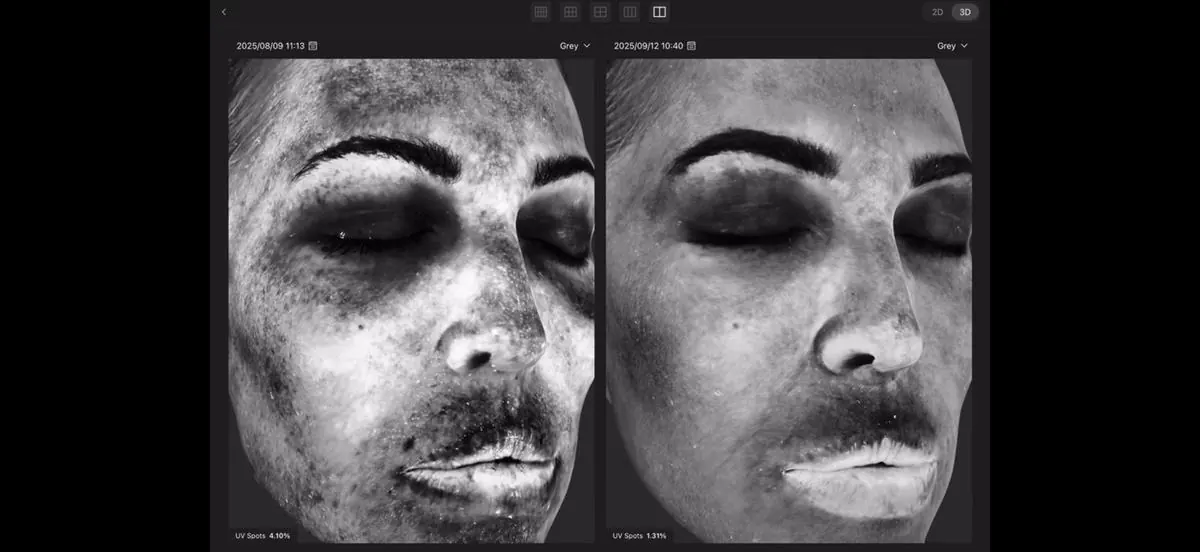
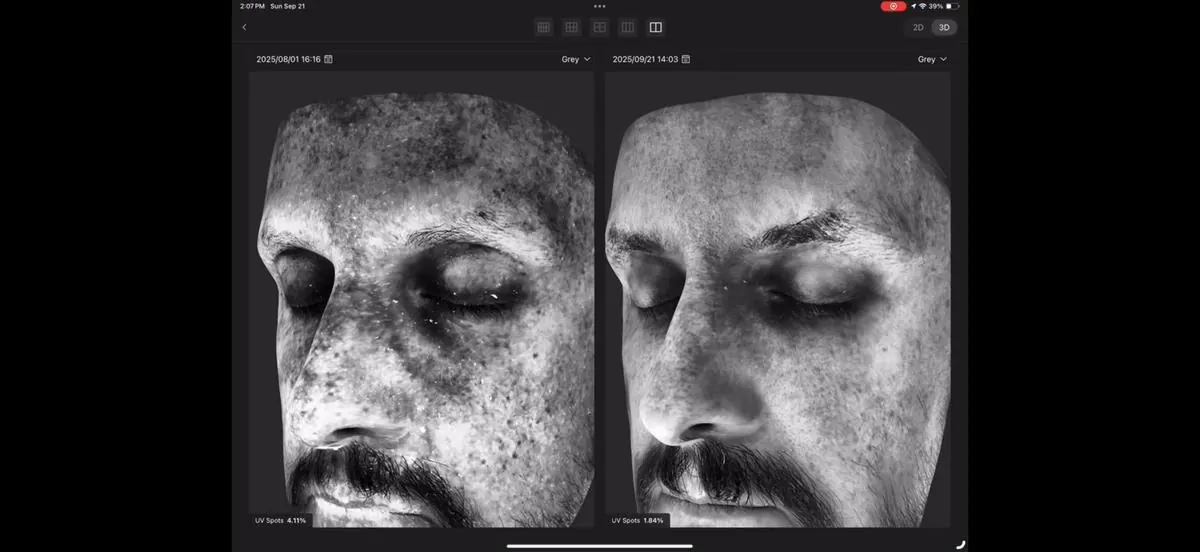
For every visible spot, the surrounding skin typically hides many times more damage that has not yet surfaced, what dermatologists call the photodamaged field. A face that looks clear in normal light can reveal widespread pigment, UV damage and vascular change under multi-spectral analysis, and this hidden burden shows up across every skin tone. Imaging turns an abstract idea into a picture you can see, and it gives us an objective baseline to measure progress against later. Skin analytics is part of our broader diagnostics approach: measure first, then treat.
Pillar 2: why CO2 alone treats the whole field
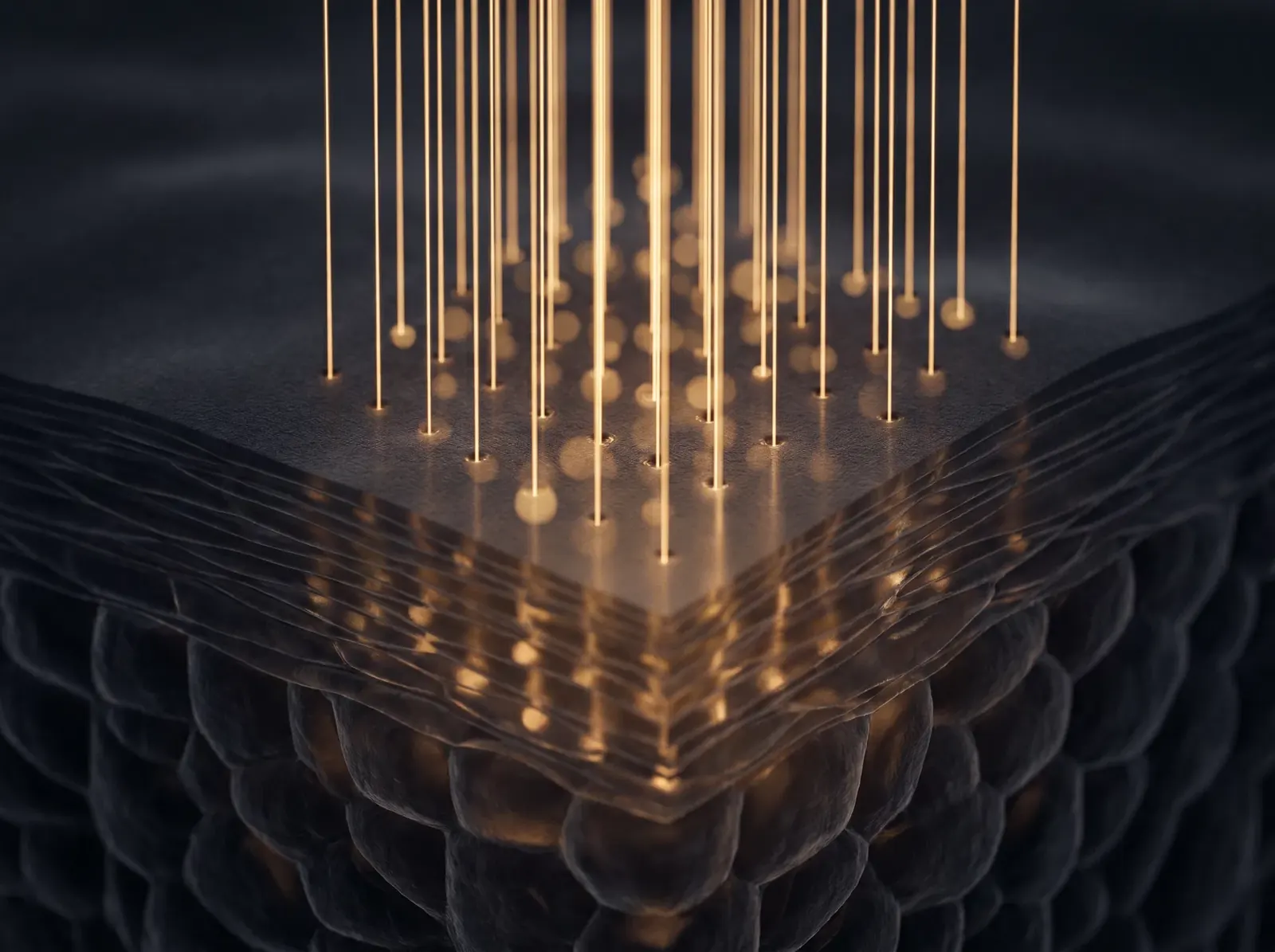
High-density fractional CO2 laser does something a cream or a freeze cannot. Its energy creates precise micro-columns through the skin that initiate a controlled wound-healing cascade. The body reorganizes and rebuilds the collagen matrix and replaces sun-damaged cells with new, healthier skin across the entire treated field.
Compare the options by how much of the problem they address:
- Spot treatment (incomplete). Freezing or cutting out the single visible lesion ignores the surrounding field, so new damage keeps surfacing.
- Field treatment (better). Topicals and light-based therapy treat the whole sun-damaged area at once, visible and hidden together.
- High-density CO2 laser (most durable). Resurfaces the field and triggers a deep wound-healing and collagen-remodeling cascade that replaces damaged cells with new, healthier skin. This mechanism is what makes the benefit last.
Book CO2 at deRMA Skin Institute. Treatment is delivered personally by Dr. Sajic in Guelph. Request a consultation to confirm candidacy. Book now →
The evidence: at 6 months they look alike, at 30 months they do not
Durability is where CO2 separates from everything else, and it is the number that should drive the decision. In a head-to-head durability dataset comparing four field-treatment modalities (high-density CO2 laser, low-density CO2 laser, topical 5-FU, and methyl aminolevulinate photodynamic therapy), mean lesion burden looks comparable across all four at six months. By thirty months, only high-density CO2 holds its reduction. The rest rebound.
High-density CO2 laser is the only field treatment that sustains up to a 90% reduction in pre-cancerous and early skin-cancer lesions at 30 months.
Held to the strict standard of a 90% or greater reduction in actinic (pre-cancerous) and early skin-cancer lesions at 30 months, the share of patients reaching that threshold looks like this:
These figures reflect the treatment-durability dataset used across our education pages and are presented as representative of the plotted means, not as a meta-analysis. Individual results vary, and a physician assessment determines what is appropriate for your skin. Details on treatment plans are on our CO2 plans and pricing page.
The practical takeaway: clearing the field, not just one spot, is what resolves rough patches and mottled sun damage across the whole area rather than lesion by lesion. It is also why field treatment sits at the center of our skin cancer prevention thinking.
Pillar 3: boost the result with DNA-repair skincare
Ultraviolet light damages the DNA inside skin cells. DNA-repair serums are formulated with repair enzymes and photolyase-type ingredients intended to support the skin's own repair machinery and slow the accumulation of UV damage between treatments. They are an adjunct to, not a replacement for, sun protection and field treatment.
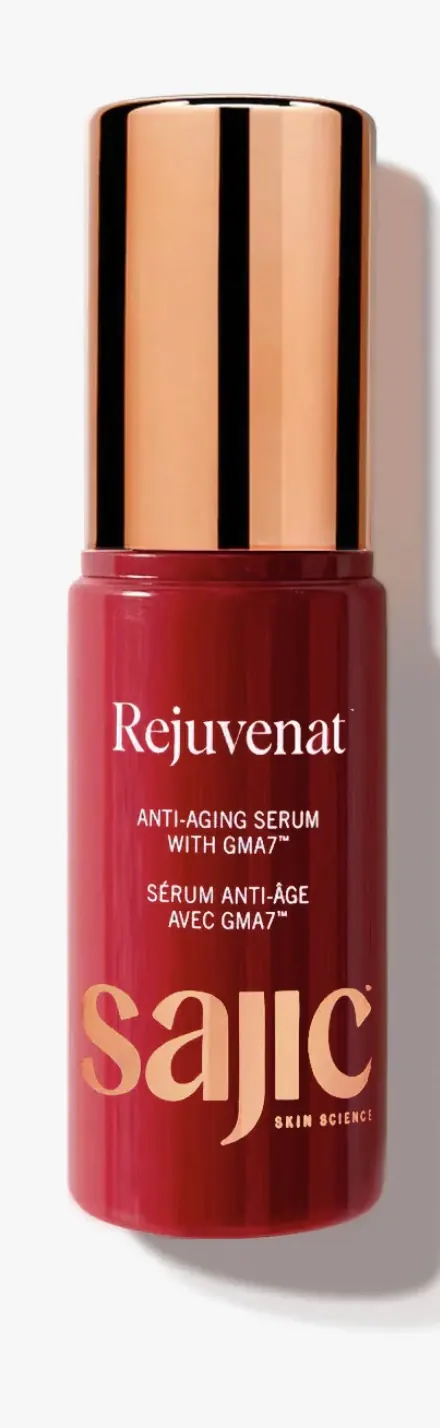
Rejuvenat (Repair & Protect) is our physician-formulated repair-and-protect serum, designed to support DNA repair and antioxidant defense as part of a field-care routine after CO2 treatment. Used within a maintenance plan, it helps protect the investment you make in resurfacing by keeping the field calmer and better defended over time. It sits alongside the rest of our custom compounded skincare program.
Internal longevity: supporting skin from the inside
CO2 does the heavy lifting on the surface. Internal measures support and extend it from within. Some are well established, others are genuinely emerging, and we will always tell you which is which.
Nicotinamide (vitamin B3), oral, established
In the ONTRAC phase-3 trial, oral nicotinamide reduced new non-melanoma skin cancers by about 23% and actinic keratoses by about 13 to 15% at 12 months in high-risk patients. It is a low-cost daily adjunct; discuss dosing and fit with your physician.
Omega-3 fatty acids, nutrition
Long-chain omega-3s (EPA and DHA) have been shown to reduce UV-induced inflammation in human skin and support barrier resilience. As part of an optimized omega-3 index, they complement topical and energy-based treatment.
GLP-1 therapies, emerging
GLP-1 receptor agonists, best known for metabolic and weight management, are an emerging area of interest in skin health through their anti-inflammatory effects. The dermatologic evidence here is early and evolving. You can read more about our GLP-1 program.
Topical DNA-repair and antioxidants
Topical DNA-repair enzymes and antioxidant serums, such as Rejuvenat, help defend and repair between treatments. This is a core part of maintenance, covered above.
Oral supplements and emerging therapies carry their own considerations and are appropriate only after individual medical assessment. Internal longevity support is layered onto our peptide, GLP-1 and plasma-exchange programs. Nothing here is a substitute for daily sun protection and regular skin checks.
Frequently asked questions
Why is high-density CO2 laser considered the most durable field treatment?
High-density fractional CO2 laser resurfaces the entire sun-damaged field and triggers a deep wound-healing and collagen-remodeling cascade that replaces damaged cells with new, healthier skin. In a head-to-head durability dataset, it is the only modality that sustains up to a 90% reduction in pre-cancerous and early skin-cancer lesions at 30 months, while topical 5-FU, photodynamic therapy and low-density laser fall away at that strict threshold.
What does "seeing the invisible" mean for my skin?
Standard light only shows the surface of your skin. Multi-spectral skin-analysis imaging such as VISIA and Evolab Insight maps what the eye cannot see: subsurface UV damage, brown-spot pigment, redness and vascular change. It turns the hidden photodamaged field into a picture and gives us an objective baseline to measure your progress against.
How does Rejuvenat boost the results of CO2 laser?
Rejuvenat (Repair & Protect) is a physician-formulated DNA-repair and antioxidant serum. Used as part of a maintenance plan after CO2 resurfacing, it is designed to support the skin's own repair machinery and slow the accumulation of new UV damage between treatments, helping protect the investment you make in resurfacing. It is an adjunct to, not a replacement for, sun protection and field treatment.
What is internal longevity support and does it actually help skin?
Internal longevity support means addressing skin health from the inside as well as the outside. Oral nicotinamide (vitamin B3) reduced new non-melanoma skin cancers by about 23% and actinic keratoses by about 13 to 15% at 12 months in the ONTRAC trial; omega-3 fatty acids have been shown to reduce UV-induced skin inflammation; and GLP-1 therapies are an emerging area of interest through their anti-inflammatory effects. These are adjuncts that should only be used after individual medical assessment.
Is one CO2 treatment enough, or do I need maintenance?
CO2 laser does the heavy lifting on the field, but sun damage is cumulative and ongoing. The most durable results come from pairing the resurfacing treatment with daily sun protection, DNA-repair skincare like Rejuvenat, and, where appropriate, internal longevity support. A physician assessment determines the right cadence for your skin.
Verifiable sources
The clinical claims in this article are drawn from the peer-reviewed literature below. CO2 durability figures reflect the durability dataset used across our education pages and are presented as representative of the plotted means, not as a meta-analysis.
- Chen AC, et al. A Phase 3 Randomized Trial of Nicotinamide for Skin-Cancer Chemoprevention (ONTRAC). N Engl J Med. 2015;373(17):1618–1626.
- Pilkington SM, et al. Omega-3 polyunsaturated fatty acids: photoprotective macronutrients. Exp Dermatol. 2011;20(7):537–543.
- Xu Y, et al. Fractional laser resurfacing initiates a wound-healing cascade and dermal collagen remodeling (mechanism review). PMC.
- GLP-1 receptor agonists as emerging modulators of inflammation in dermatology (review). PMC. 2025.
Where this fits at Sajic Longevity. A physician assessment maps your hidden field with skin analytics, weighs whether high-density CO2 is right for your skin, and builds the DNA-repair and internal-longevity plan that protects the result. Book a consultation or call 1-888-430-4665.
Ready to see what CO2 can do for you?
The invisible damage is already there. The question is whether you treat the surface or reset the skin. Here is how to move from reading to results.
Plans and what CO2 costs
Transparent anchors for physician-delivered skin longevity protocols.
Read more → Book at the clinicBook CO2 at deRMA Skin Institute
Treatment is delivered personally by Dr. Sajic in Guelph. Request a consultation to confirm candidacy.
Book now → Shop Sajic Skin ScienceRepair & Protect aftercare bundle
Rejuvenat plus Protectif SPF: the two products that protect a resurfacing result.
Shop now →Not sure which is right for you? Call 1-888-430-4665 or email consult@sajicskin.com and our team will point you to the right starting point.
This article is for education and general information only. It is not medical advice, does not establish a physician-patient relationship, and should not replace consultation with a qualified healthcare provider. Individual results vary. Treatment decisions are made only after an individual assessment.