How to Pick the Right Vitamin C: Why Most Serums Fail, and How to Know Yours Is Actually Working
Vitamin C is the most recommended antioxidant in skincare, and the most misunderstood. The right pH, real stability, photostability and smart formulation separate a serum that protects your skin from one that oxidizes in the bottle. This is a science-led guide to choosing correctly, and to measuring whether it works on your skin, not just in a study.
A great molecule, undone by bad formulation
L-ascorbic acid (LAA) is the only biologically active, naturally occurring form of vitamin C, the form your skin uses directly. It neutralizes free radicals, is essential for collagen synthesis, and helps even tone. On paper, it is close to ideal.
In practice, it is notoriously unstable. Exposed to air, light, heat and water, it oxidizes quickly, turning yellow-brown and losing its activity. By the time many serums reach your skin, the active dose is a shadow of the number on the label. The molecule did not fail; the formulation did.
Choosing well comes down to five things, plus a final step almost nobody talks about:
- pH below 3.5. Or it cannot penetrate the skin.
- Real stability. Or it oxidizes before it works.
- Photostability. Or sunlight degrades it as you wear it.
- Smart formulation. Synergists, not antagonists.
- Measured activity. Proof it works on you, not just in a lab.
Part 1: four hard truths about vitamin C chemistry
These are not marketing details. They are the chemistry that decides whether a serum does anything at all.
1. The pH has to be right, and stay right
L-ascorbic acid must be formulated below pH 3.5 (ideally around 2.5 to 3.5) to cross the stratum corneum at all; above that, penetration drops sharply. The harder problem is keeping that acidic environment working once the serum hits your skin's own buffering. A formula that drifts out of range on contact delivers far less than its label implies.
2. Stability is the whole game
LAA oxidizes on exposure to air, light, heat and water. That yellow-brown tint is dehydroascorbic acid, the spent form. And degradation does not stop at the bottle: enzymes and oxidative conditions on your skin can degrade it further. Concentration alone means nothing if the molecule is already inactive.
3. Photostability: it can degrade in daylight
Vitamin C is photolabile. Worn under sun without a stabilizing system, it can break down on your face during the very UV exposure you wanted protection from. Pairing it with the right co-antioxidants, and with sunscreen, is what makes a daytime antioxidant actually protective.
4. It can be inactivated by your other actives
Vitamin C lives at a low pH; retinol and several other actives work at higher pH. Layered together at the wrong time, they can blunt each other. This is why sequence and timing matter, and why you should verify activity rather than assume your routine is additive.
Rejuvenat corrector cream. The GMA7 serum that anchors every formula we compound. Off the shelf, today. Shop now →
Part 2: the serum is a system, not a single ingredient
The most studied vitamin C formula in dermatology is not vitamin C alone. The landmark work behind the CE Ferulic ratio (15% L-ascorbic acid, 1% vitamin E, 0.5% ferulic acid) showed that adding ferulic acid stabilized the solution and roughly doubled its photoprotection, to about 8-fold against UV damage. Vitamin C and E also regenerate one another, extending the antioxidant network on the skin.
The lesson is that the right partners make vitamin C dramatically more effective, and more stable. The wrong routine wastes it.
There is also a ceiling. Percutaneous absorption studies found skin saturates around 20% concentration. Bigger numbers on the label do not mean more in your skin; formulation quality does.
Beyond vitamin C: broad-spectrum antioxidants
Vitamin C is water-soluble, so it cannot reach everywhere damage happens. A complete antioxidant defense layers complementary molecules that cover different compartments and free-radical types. Hydroxytyrosol is a good example: an olive-derived polyphenol and one of the most potent natural antioxidants known. It is both water- and lipid-compatible, broad in the free radicals it scavenges, anti-inflammatory, and photoprotective, covering territory water-soluble vitamin C cannot reach on its own. Pairing broad-spectrum antioxidants like this with vitamin C is how you protect the whole system.
Part 3: proof, not promises
A study can tell you a formula works in general. It cannot tell you whether your skin is actually protected today. The PAOT antioxidant test measures your skin's real antioxidant capacity and oxidative status, so we can see whether what you are applying is having an effect, and track how quickly your skin is aging. It is one of the measurement tools in our diagnostics program.
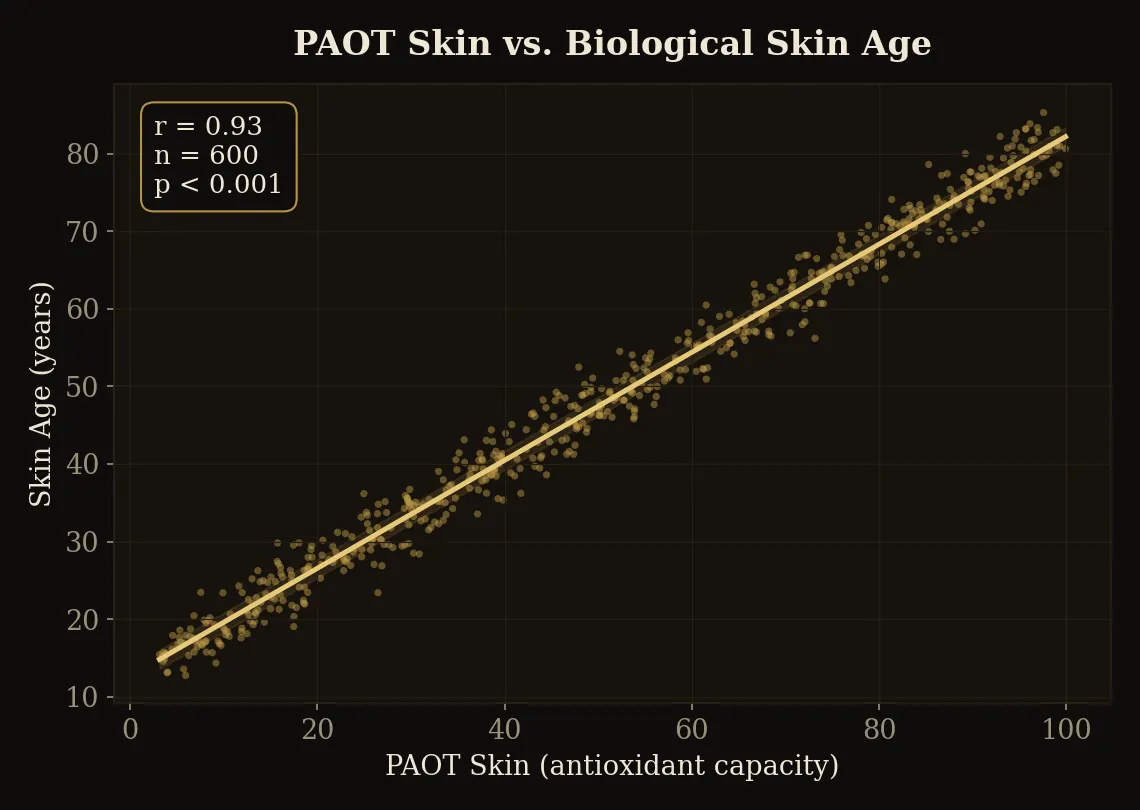
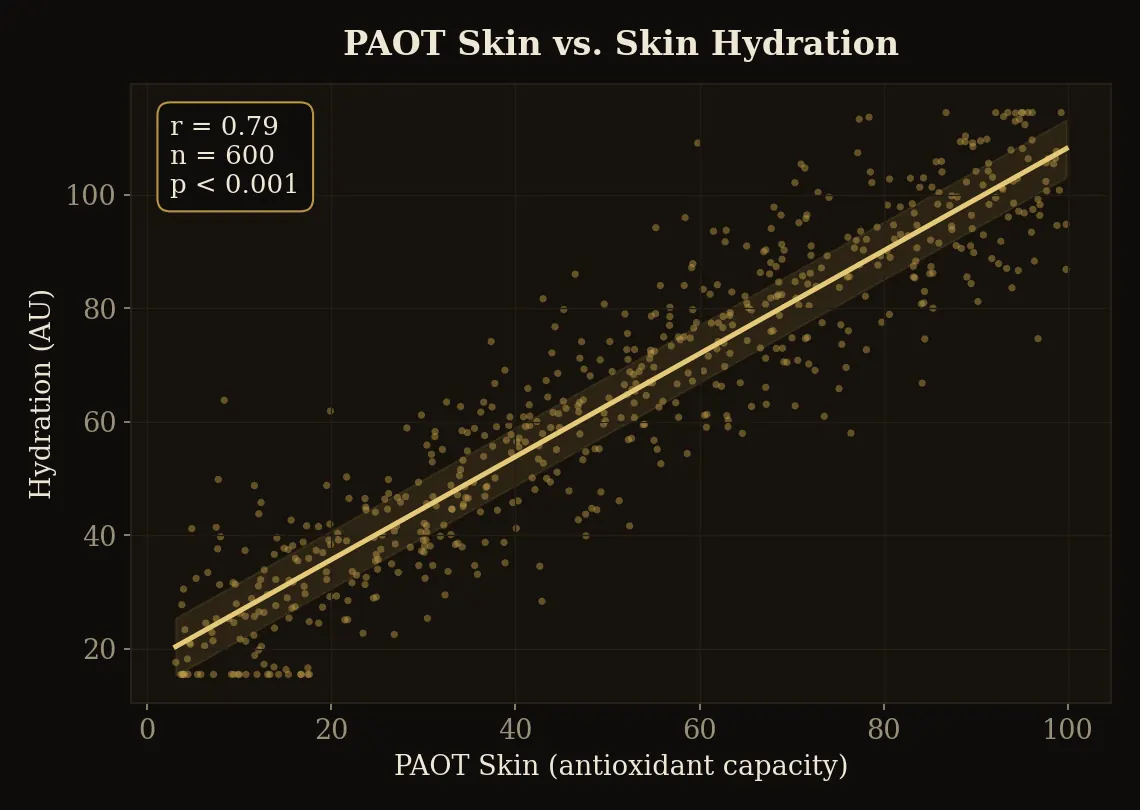
In our dataset, the PAOT skin antioxidant score tracked biological skin age almost step for step (r = 0.93, n = 1000, p < 0.001): lower antioxidant capacity, older-behaving skin. The same antioxidant score also correlated with hydration (r = 0.79, n = 982, p < 0.001), and with elasticity, pigmentation, skin pH and measured vitamin C levels.
These are correlations from our own preliminary dataset (Sajic Skin Longevity Institute, publication 2027), shown to illustrate the principle: antioxidant status is measurable, and it tracks meaningful markers of skin health. It lets us verify a product is working on you, not assume it from a label.
Part 4: what happens when you measure real serums on real skin
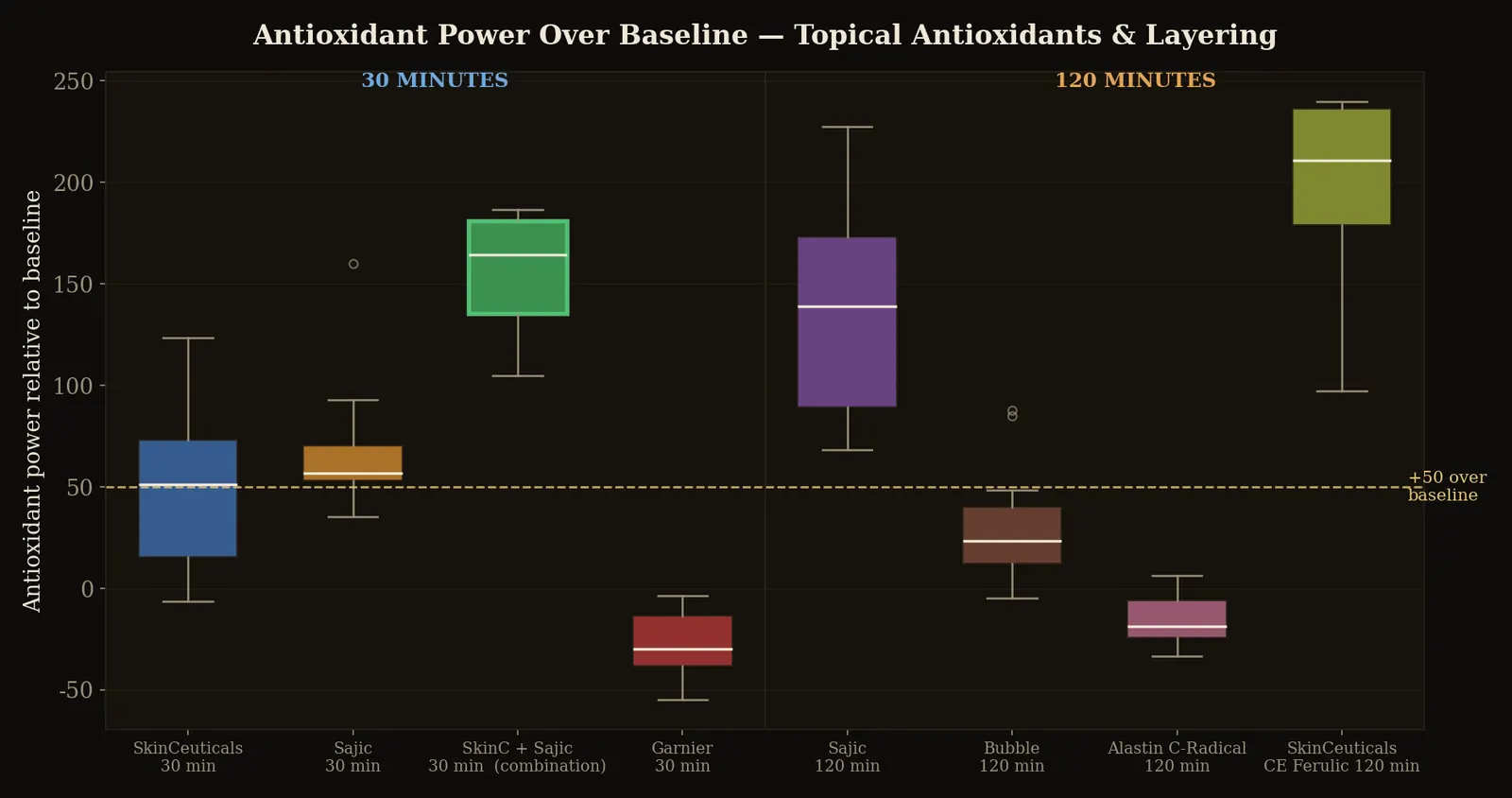
We measured antioxidant power above baseline at 30 and 120 minutes after applying a range of topical antioxidants, including layering two formulas together. The pattern is the whole point of this article.
The single highest early reading was not any one serum. It was the right two, layered correctly.
At 30 minutes, the combined application of SkinCeuticals plus the Sajic (Rejuvenat) formulation produced the greatest early antioxidant activity, exceeding either product alone and already matching the level that CE Ferulic on its own only reached at 120 minutes. In roughly 15 to 30 minutes, the combination reached protection others took nearly two hours to approach. Correctly sequenced, Rejuvenat did not just perform alone; it activated and boosted the other vitamin C to work better, faster.
At 120 minutes, CE Ferulic sustained high capacity, followed by the Sajic formulation, while Alastin C-Radical stayed near baseline. Sequence, concentration and timing matter, especially if you are looking for protection. Get them wrong, and you leave most of the speed, and most of the protection, on the table.
Data: Sajic Skin Longevity Institute (publication 2027), Figure 3. These are preliminary results from our own dataset, with boxplots showing variability. They illustrate the layering principle rather than serving as a definitive product ranking.
Part 5: the formulation we trust
Modern longevity science describes 12 hallmarks of aging: genomic instability, telomere attrition, epigenetic alterations, loss of proteostasis, disabled autophagy, deregulated nutrient sensing, mitochondrial dysfunction, cellular senescence, stem cell exhaustion, altered intercellular communication, chronic inflammation and dysbiosis. Oxidative stress sits upstream of many of them, driving the collagen breakdown, mitochondrial damage, senescence and chronic inflammation we see in aging skin. An antioxidant serum that is stable, correctly formulated and broad-spectrum acts at the top of that cascade.
That is the design philosophy behind Rejuvenat Anti-Aging Serum with GMA7: an antioxidant system intended to work across these hallmarks and support overall skin quality, and, as our layering data showed, to make a correctly sequenced vitamin C routine perform better than either product alone. It is part of our custom compounded skincare program, where a formula can be compounded around your skin, your goals and what your measurements show.
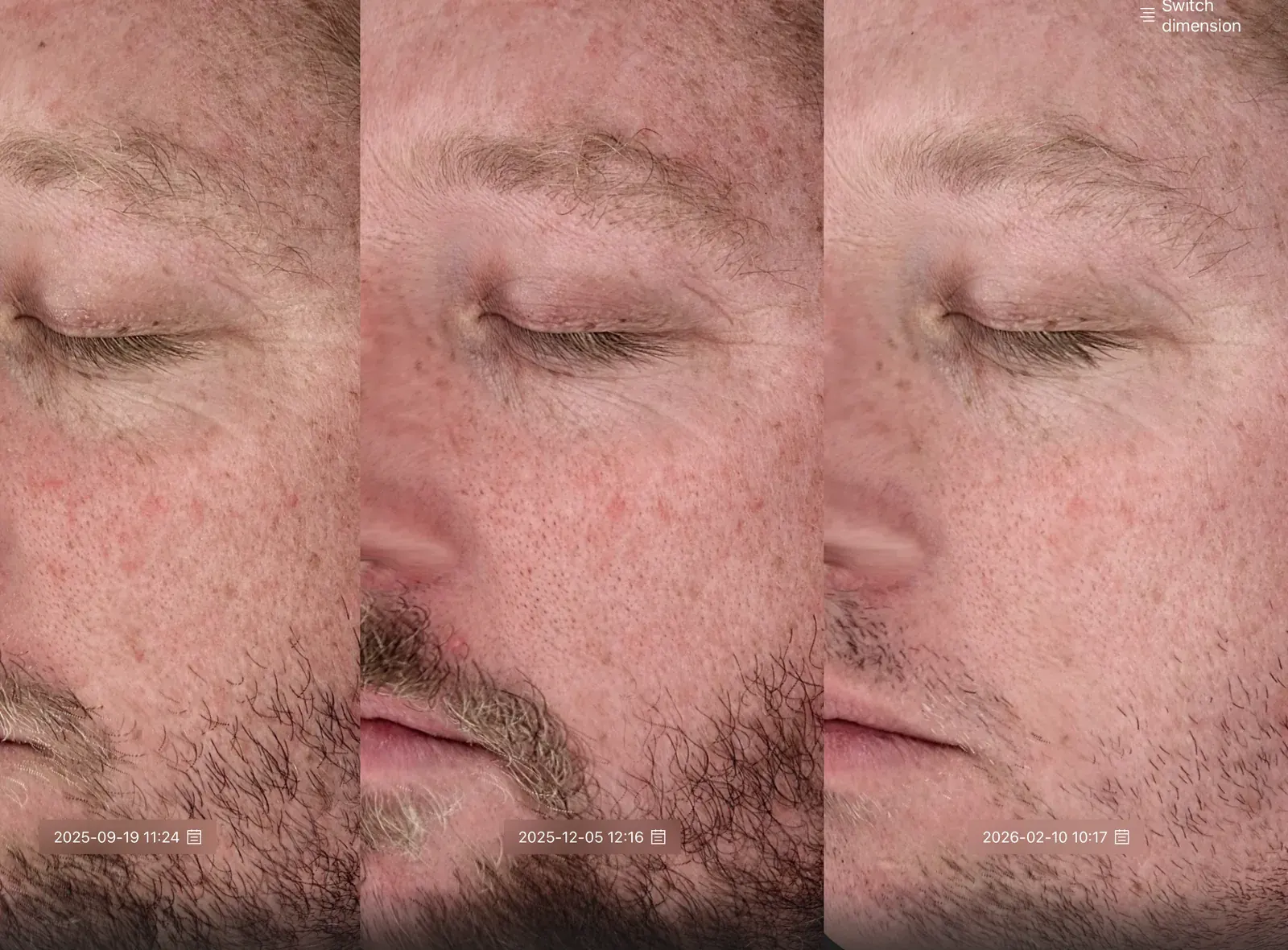
We also track results objectively rather than by feel. In one case example, a single patient followed across three visits (September 2025 to February 2026) showed visibly calmer redness and fewer brown spots on standardized facial imaging with a consistent antioxidant and protection routine, and skin-analysis comparisons showed measured UV-spot coverage dropping between visits. Individual results vary, but that is the kind of objective change we look for to confirm protection is working.
For busy people: the two non-negotiables
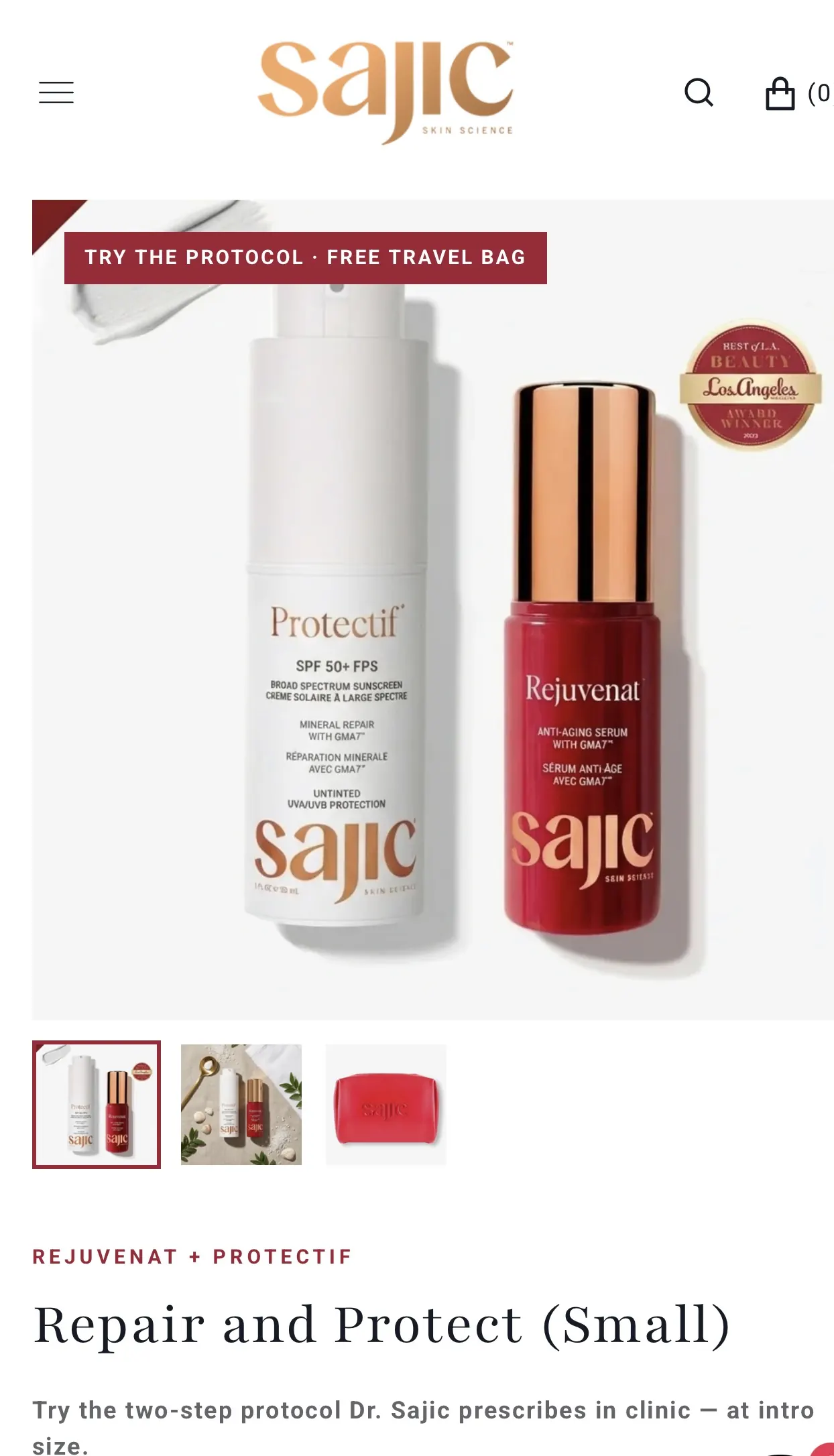
If you only carry two things, carry these: a stable antioxidant serum and a broad-spectrum sunscreen. Antioxidants neutralize the free radicals UV creates; sunscreen blocks much of the UV in the first place. Together they are the simplest, highest-yield protection routine that exists. That is exactly what the Repair & Protect duo is: Rejuvenat serum plus Protectif SPF 50+ in a travel size, built for people who move fast and still want their skin defended on the road.
Why you can trust this framework
Dr. Dusan Sajic, MD, PhD is a dermatologist whose work bridges the lab and the clinic. He is a co-author of the global, consensus-based treatment algorithm for skin quality, published open-access in the Journal of Cosmetic Dermatology alongside an international panel of dermatology experts. The framework many clinicians use to think about skin quality is one he helped write.
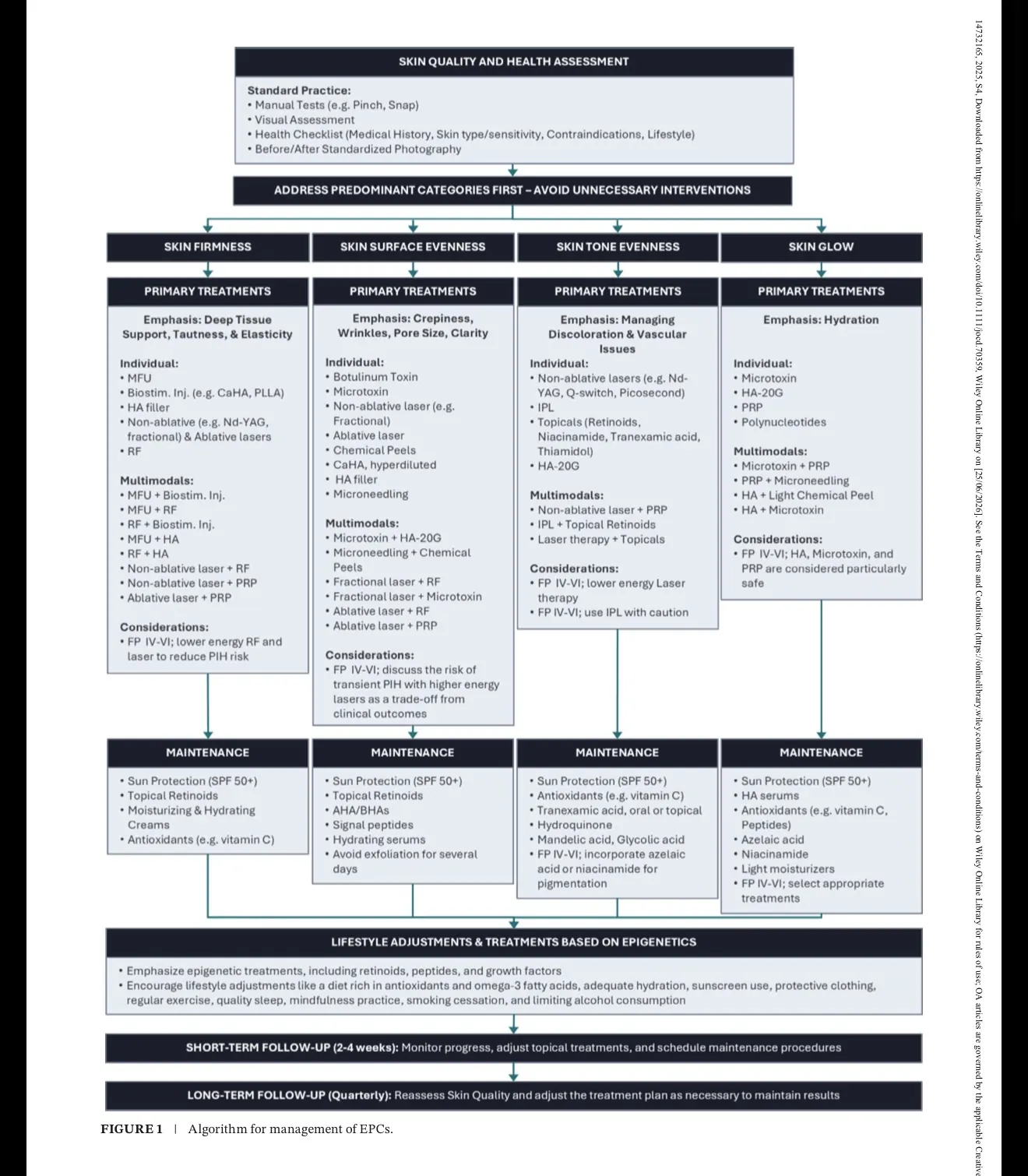
That consensus is explicit on this point: across every category of skin quality (firmness, surface evenness, tone evenness and glow), the maintenance foundation is SPF 50+ sun protection and antioxidants such as vitamin C. Exactly the routine, done correctly, that this article is about.
Frequently asked questions
What pH should a vitamin C serum be?
For L-ascorbic acid (pure vitamin C), the serum should be formulated below pH 3.5, ideally around 2.5 to 3.5, because the molecule has to be un-ionized to cross the skin barrier. Above roughly pH 3.5, penetration falls off quickly. Just as important is whether the formula holds that environment when it meets your skin.
Why does my vitamin C serum turn yellow or brown?
That color change means the L-ascorbic acid has oxidized into dehydroascorbic acid and lost activity. Vitamin C is unstable in air, light, heat and water, so a serum that has darkened is past its useful life. Good packaging, stabilizing ingredients like ferulic acid and vitamin E, and correct storage all slow this down.
Can I use vitamin C and retinol together?
They can be part of the same overall routine, but they prefer different pH environments and can blunt each other if layered at the same moment. Sequence and timing matter; many people use vitamin C in the morning and retinol at night. Rather than assume your routine is additive, the most reliable approach is to measure your skin's antioxidant status and adjust.
What is the PAOT test?
PAOT is a measurement of your skin's antioxidant capacity and oxidative status. In our preliminary data it tracked closely with biological skin age and other skin markers. It lets us verify whether a topical antioxidant is actually raising your skin's defenses: proof on your skin, not just a claim from a study.
Is a higher percentage of vitamin C always better?
No. Percutaneous absorption studies show the skin saturates around 20%. Beyond that, you do not get meaningfully more into the skin, and very high concentrations can be more irritating and less stable. Formulation quality, pH, stability and the right antioxidant partners matter far more than chasing a big number on the label.
Verifiable sources
The chemistry and clinical claims in this article are drawn from the peer-reviewed literature below. The study figures are from our own preliminary dataset and are credited as such.
- Pinnell SR, et al. Topical L-ascorbic acid: percutaneous absorption studies. Dermatol Surg. 2001;27(2):137–142.
- Lin FH, et al. Ferulic acid stabilizes a solution of vitamins C and E and doubles its photoprotection of skin. J Invest Dermatol. 2005;125(4):826–832.
- Kerscher M, Goldie K, Hirano C, Lowe S, Mariwalla K, Moore M, Park JY, Sajic D, et al. How to Treat Skin Quality: A Consensus-Based Treatment Algorithm and Expert Guidance. J Cosmet Dermatol. 2025 (open access).
- López-Otín C, et al. Hallmarks of aging: An expanding universe. Cell. 2023;186(2):243–278.
Where this fits at Sajic Longevity. Our physician-led team can choose the right vitamin C for your skin, sequence it with your other actives, compound a custom formula around your goals, and measure whether it is actually working with PAOT and standardized imaging. Book a consultation or call 1-888-430-4665.
Stop guessing at serums.
Most vitamin C fails before it reaches your skin. A formula built around your biology does not.
Custom compounded skincare
Physician-formulated for melasma, redness, acne, pigment and photoaging. Built on Rejuvenat.
Read more → BookStart with a virtual skin consult
A Sajic clinician reviews your skin story and prescribes the formula.
Book now → Shop Sajic Skin ScienceRejuvenat corrector cream
The GMA7 serum that anchors every formula we compound. Off the shelf, today.
Shop now →Not sure which is right for you? Call 1-888-430-4665 or email consult@sajicskin.com and our team will point you to the right starting point.
This article is for education and general information only. It is not medical advice, does not establish a physician-patient relationship, and should not replace consultation with a qualified healthcare provider. Individual results vary. Treatment decisions are made only after an individual assessment.