Skin Cancer & Aging: The Same Disease, and Laser Can Now Reset the Clock
Skin cancer and skin aging share the same biology: accumulated DNA damage, senescent cells, and a failing repair system. New evidence shows that fractional laser can reverse these changes at the epigenetic level, but not for everyone. Measuring your individual response is the key, and that honesty is the point of this article.
The hidden link: not two problems, but one
For decades, dermatology treated skin cancer and skin aging as separate concerns: one a disease, the other a cosmetic inevitability. The molecular biology tells a different story. The same accumulated UV damage that makes skin look old is the same damage that makes it vulnerable to cancer. The same senescent cells that degrade collagen also suppress the immune surveillance that catches early tumors.
- Accumulated DNA damage. UV radiation creates thymine dimers and oxidative lesions. Over decades, unrepaired damage accumulates in keratinocytes and fibroblasts, driving both visible aging and the mutations that initiate skin cancer.
- Cellular senescence. Damaged cells that stop dividing but refuse to die become "zombie cells." They secrete inflammatory signals (the SASP) that degrade collagen, suppress immunity, and create a microenvironment where cancer can emerge.
- IGF-1 dysregulation. UV exposure disrupts insulin-like growth factor 1 signaling in the skin. When IGF-1R is inhibited, UV-induced hyperproliferation worsens, a direct pathway from photodamage to cancer (J Clin Invest 2021).
The implication follows directly: if you could reset the accumulated damage in the skin, clear the senescent cells, restore repair capacity, and normalize growth signals, you would be treating both aging and cancer risk at once.
The mechanism: what fractional laser does at the cellular level
Fractional laser creates thousands of microscopic channels, called Microthermal Treatment Zones (MTZs), through the epidermis into the dermis. Each channel is narrower than a human hair. The surrounding tissue is spared, which is what makes healing fast and controlled. The result is a controlled wound-healing cascade that clears damaged cells and builds new collagen, in four steps:
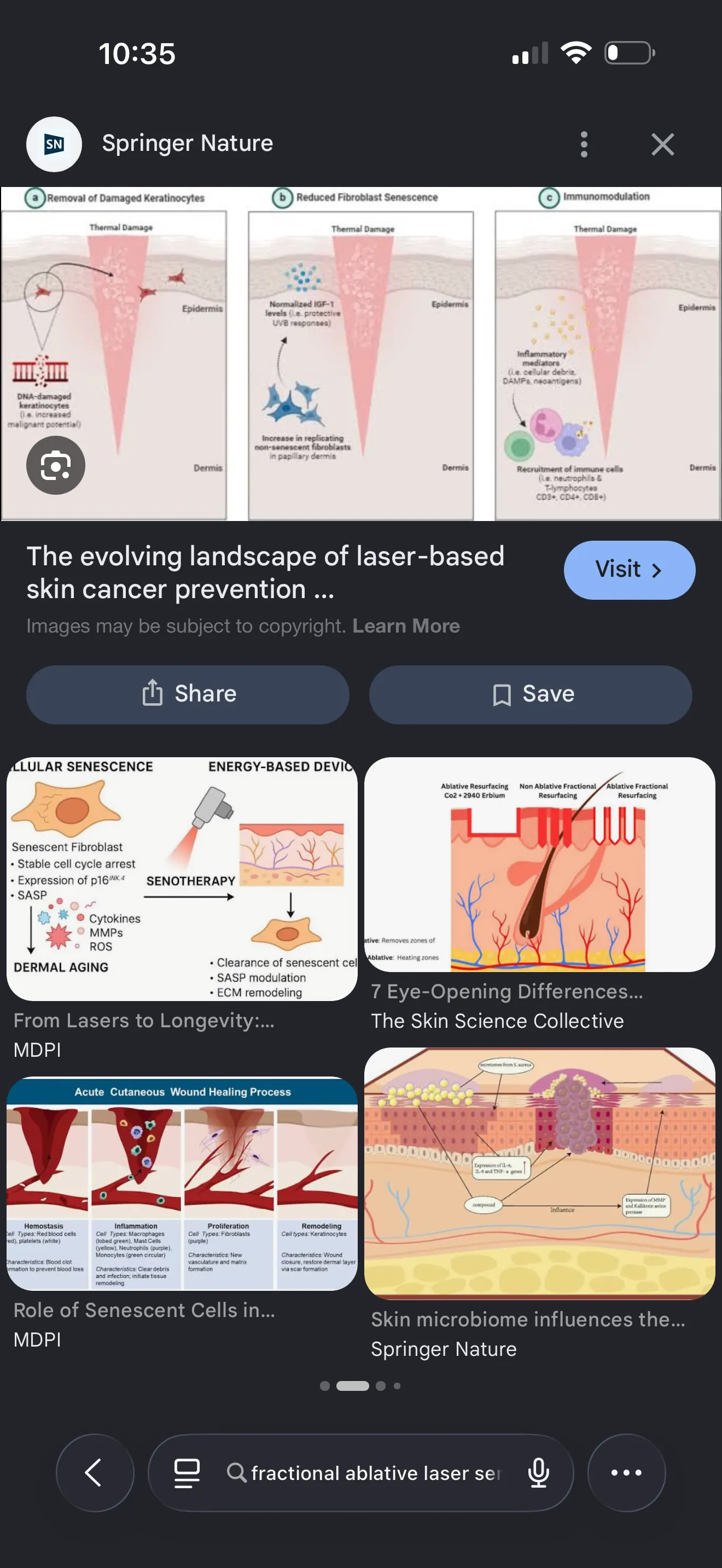
- Micro-channels form. Laser energy vaporizes narrow columns of tissue (MTZs), leaving surrounding cells intact to drive rapid healing.
- MEND debris is expelled. MicroEpidermal Necrotic Debris, containing damaged, sun-mutated keratinocytes, is pushed to the surface and shed within days.
- The wound-healing cascade runs. Hemostasis, then inflammation, proliferation, and remodeling. Fresh fibroblasts lay down new collagen III, which matures to collagen I over months.
- Immune cells are recruited. T-lymphocytes (CD3+, CD4+, CD8+) flood the treated zone, restoring immunosurveillance against pre-cancerous cells.
A Springer Nature mechanism review summarizes the same three effects: removal of DNA-damaged keratinocytes, reduced fibroblast senescence with normalized IGF-1, and immunomodulation through T-cell recruitment.
Book a skin check at deRMA Skin Institute. Mole mapping and medical dermatology in Guelph, then laser if it is indicated. Book now →
The evidence: two landmark studies
Study 1: cancer prevention
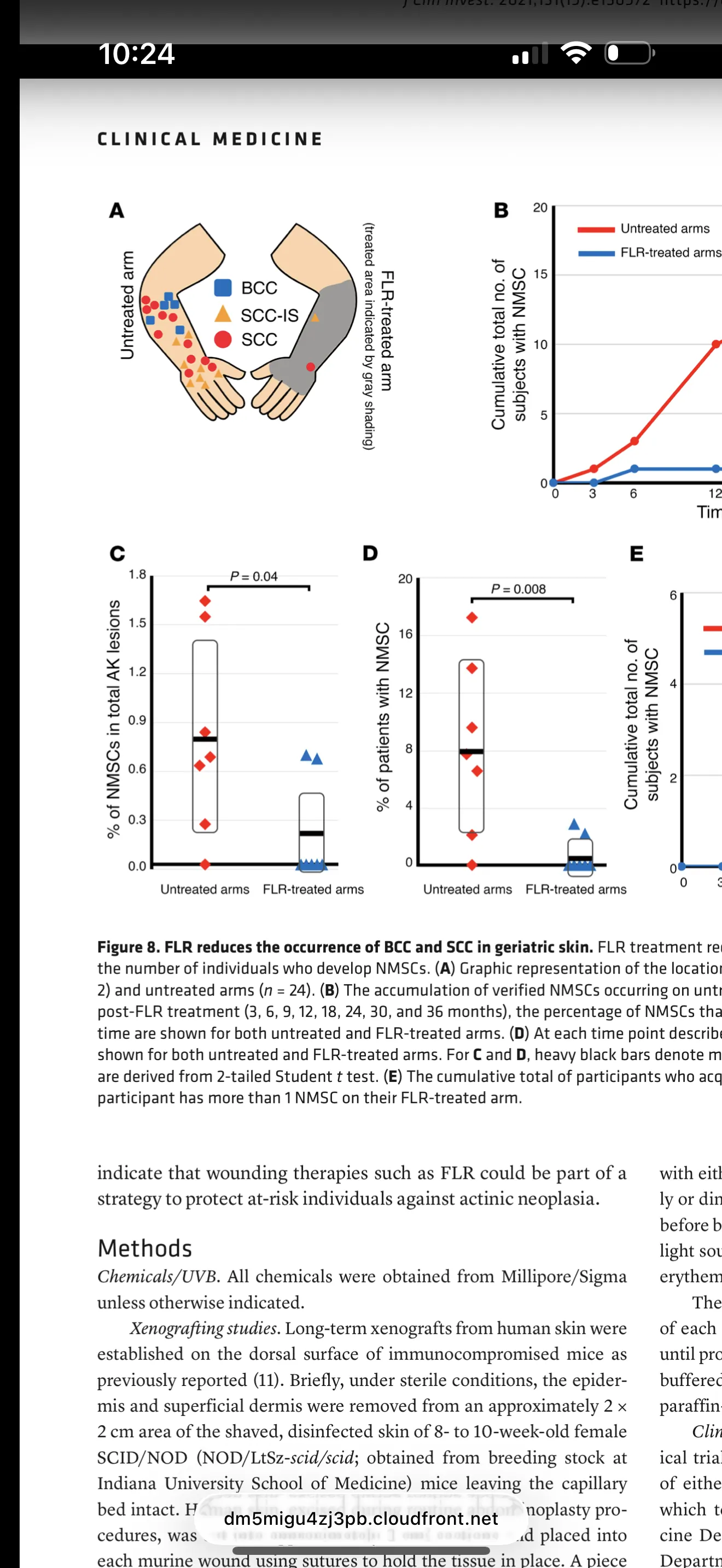
In a 36-month controlled study of geriatric skin (J Clin Invest 2021), fractional laser resurfacing (FLR) on one arm versus an untreated control on the other demonstrated a significant reduction in non-melanoma skin cancer (NMSC) development. The study design: n = 24 arms (12 subjects), 36-month follow-up, geriatric skin with extensive photodamage. FLR-treated arms showed near-zero cumulative NMSC while untreated arms reached 11 to 12 events. The percentage of patients with NMSC differed at P = 0.008, and the percentage of NMSCs arising in actinic keratosis lesions at P = 0.04. Notably, the box plots show some non-responders in the treated group (outlier dots), a point we return to below. (J Clin Invest. 2021;131(19):e150972, Fig. 8.)
Study 2: epigenetic reversal
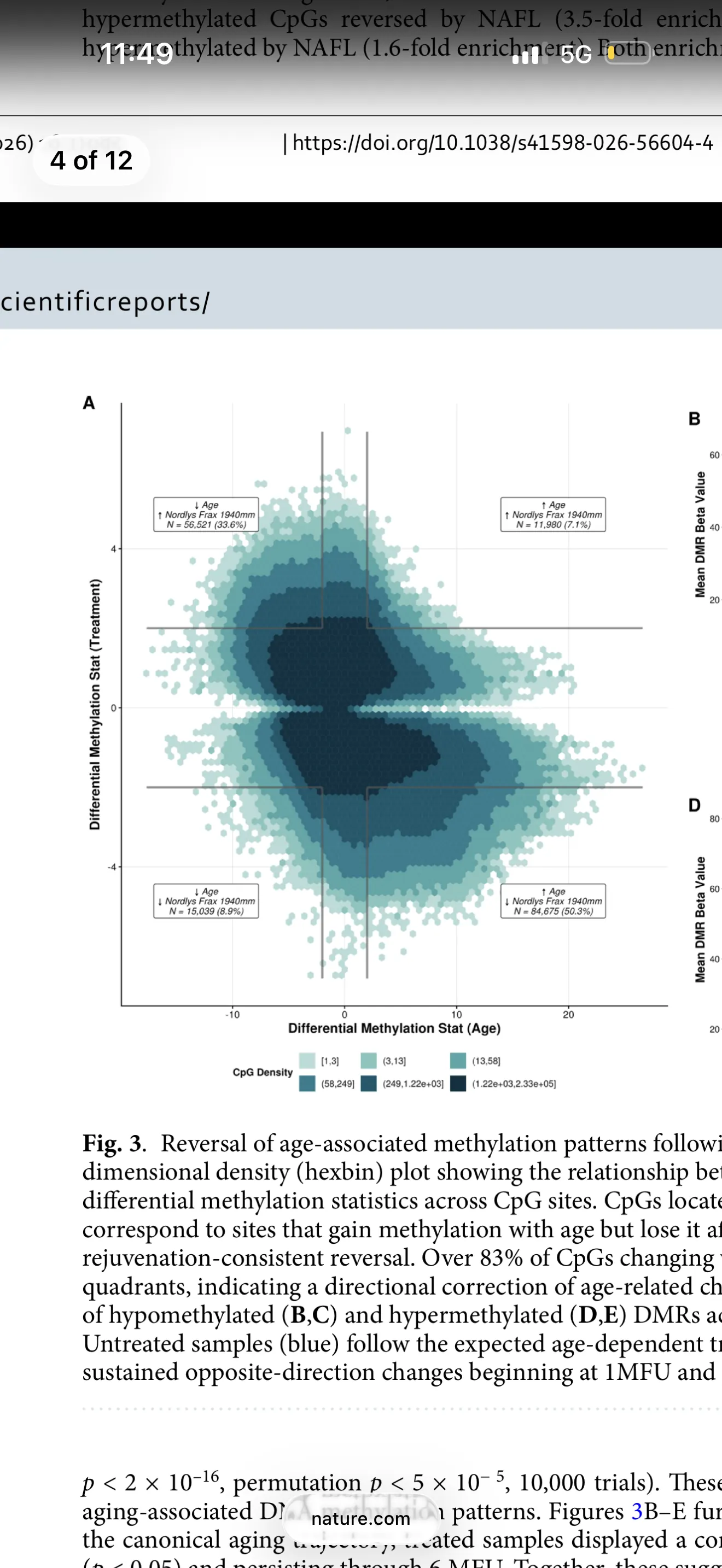
In a split-face study of 22 adults treated three times with a 1940nm non-ablative fractional laser (Nature Scientific Reports, 2026, doi:10.1038/s41598-026-56604-4), over 83% of CpG sites that change with aging showed treatment-induced shifts in the rejuvenation-consistent direction. Specifically, 50.3% of age-associated CpGs showed increased methylation with treatment (sites that lose methylation with age), and 33.6% showed decreased methylation with treatment (sites that gain methylation with age), both consistent with biological rejuvenation. This is first-in-human data.
Important caveat. The epigenetic findings are first-in-human data from a small pilot study (n = 22, split-face). They are promising early evidence, not established practice. Larger trials are needed to confirm durability and clinical significance.
The uncomfortable truth: not everyone responds the same way
Look carefully at the box plots in the cancer-prevention data. While the median response is dramatic, there are outlier dots in the treated group: individuals whose skin did not respond as strongly. This is not a failure of the technology. It is biology: individual variation in repair capacity, inflammation, and epigenetic plasticity.
Some patients respond dramatically, with near-complete clearance of pre-cancerous lesions and measurable epigenetic rejuvenation. Others show partial or minimal response; their biology needs additional support, different parameters, or a combined approach.
The question is not "does laser work?" It does, on average. The question is "does it work for you?" And the only way to answer that is to measure.
Measure, don't guess
If individual variation determines whether laser resets your biology or merely resurfaces your texture, then measuring that response is not optional. It is the foundation of an honest treatment plan. We quantify the damage, track the response, and adjust the plan using three tools:
- VISIA Complexion Analysis. Multi-spectral imaging captures UV damage, porphyrins, brown spots, red areas, wrinkles, texture, and pores, quantifying what the naked eye cannot see.
- Evolab Insight. Measures skin barrier function, hydration, sebum balance, and elasticity at the cellular level, tracking how the living tissue responds to treatment over time.
- Skin Life Analytics. Our integrated platform combines multi-spectral camera data with clinical assessment to produce a biological skin age score, then tracks how it changes with each intervention. See how this fits into our diagnostics workflow.
A global perspective: skin as a health organ
When we treat the field, clearing accumulated DNA damage, reducing senescent cell burden, and restoring immune surveillance, we are not chasing youth. We are reducing disease risk and extending the functional lifespan of the body's largest organ. The cosmetic improvement is a byproduct of biology that works better. For the fuller-strength resurfacing pathway, see our CO2 laser page and CO2 plans and pricing; for the prevention side, see skin cancer prevention.
If you're a non-responder: what to combine
If measurement shows your skin is not responding as strongly to laser alone, the answer is not to give up. It is to support the biology from the inside. These adjuncts work alongside laser to strengthen the terrain:
- DNA-repair skincare (Rejuvenat). Photolyase-based repair enzymes applied after treatment to support the skin's own repair machinery. Available without prescription; see our skincare page.
- Oral nicotinamide (vitamin B3). Approximately 23% fewer new NMSCs at 12 months in immunocompetent high-risk patients (ONTRAC trial, NEJM 2015). A low-risk adjunct after physician assessment.
- Peptide therapy. Targeted peptides that support cellular repair and reduce inflammation, always after individual medical assessment. Learn more on our peptides page.
- GLP-1 therapies (emerging). An emerging area of interest for skin through anti-inflammatory effects. Early science, not yet established for skin-cancer prevention. See GLP-1 therapy.
Internal longevity support, including peptides, GLP-1 therapies (an emerging area), and plasma exchange, is appropriate only after individual medical assessment, and is an adjunct to, not a replacement for, sun protection and clinical care.
Frequently asked questions
Are skin cancer and skin aging really the same disease?
At the molecular level, they share the same upstream drivers: accumulated UV-induced DNA damage, cellular senescence, IGF-1 dysregulation, and impaired immune surveillance. Treating these shared mechanisms addresses both aging and cancer risk simultaneously. The clinical evidence is early but growing.
Can fractional laser actually prevent skin cancer?
A 36-month controlled study (J Clin Invest 2021) showed that fractional laser resurfacing significantly reduced BCC and SCC occurrence on treated skin (P = 0.008 for the percentage of patients with NMSC). This is promising early evidence in geriatric skin with extensive photodamage, but larger confirmatory trials are needed before it becomes standard preventive practice.
What does "83% epigenetic reversal" mean?
In a 2026 split-face study (Nature Scientific Reports), 83% of the CpG methylation sites that change with aging showed treatment-induced shifts in the rejuvenation-consistent direction after three sessions of 1940nm non-ablative fractional laser. This is first-in-human data from a small pilot (n = 22), promising but requiring confirmation in larger trials.
What if I'm a non-responder to laser treatment?
Individual variation is real; the published data shows outliers who respond less strongly. That is why we measure before, during, and after treatment using VISIA, Evolab, and Skin Life Analytics. If your response is suboptimal, we adjust parameters or add internal support (nicotinamide, peptides, DNA-repair skincare) to strengthen the biological terrain. The plan is never one-size-fits-all.
How do you measure biological skin age?
We use multi-spectral imaging (VISIA) to quantify UV damage, pigment, vascularity, and texture below the visible surface; Evolab Insight to measure barrier function and elasticity; and our integrated Skin Life Analytics platform to produce a composite biological age score. This is tracked longitudinally so we can see whether treatment is actually changing the biology, not just the appearance.
Is this just a cosmetic treatment marketed as health?
No. When fractional laser clears DNA-damaged cells, reduces senescent cell burden, normalizes IGF-1 signaling, and recruits immune cells to the treated field, it is performing a biological intervention, not a cosmetic one. The cosmetic improvement (smoother texture, more even tone) is a byproduct of tissue that functions better. The cancer-prevention data supports this distinction.
Verifiable sources
The cancer-prevention data (J Clin Invest 2021) is from a small controlled study in geriatric skin. The epigenetic-reversal evidence (Nature Sci Rep 2026) is first-in-human from a pilot split-face study. Both are presented as promising early data rather than established clinical practice.
- Fractional laser resurfacing reduces the occurrence of BCC and SCC in geriatric skin. J Clin Invest. 2021;131(19):e150972.
- Non-ablative fractional laser 1940-nm treatment modulates epigenetic signatures associated with skin aging: a split-face investigation. Scientific Reports (Nature), 2026.
- The evolving landscape of laser-based skin cancer prevention (mechanism review). Springer Nature.
- Xu Y, et al. Fractional laser resurfacing initiates a wound-healing cascade and dermal collagen remodeling (mechanism review). PMC.
- Chen AC, et al. A Phase 3 Randomized Trial of Nicotinamide for Skin-Cancer Chemoprevention (ONTRAC). N Engl J Med. 2015;373(17):1618–1626.
Where this fits at Sajic Longevity. A physician assessment starts by quantifying your skin's current biological state: damage burden, repair capacity, and response potential. From there we build a plan that treats the biology, not just the surface. Book a consultation or call 1-888-430-4665.
Prevention is a protocol, not a hope.
Laser can reset the clock on sun-damaged skin. The first step is knowing how much damage is there.
Skin cancer prevention program
Laser as prevention, not just repair, under a dermatologist's plan.
Read more → Book at the clinicBook a skin check at deRMA Skin Institute
Mole mapping and medical dermatology in Guelph, then laser if it is indicated.
Book now → Shop Sajic Skin ScienceProtectif mineral SPF 50+
The daily non-negotiable. Repair complex plus broad-spectrum protection.
Shop now →Not sure which is right for you? Call 1-888-430-4665 or email consult@sajicskin.com and our team will point you to the right starting point.
This article is for education and general information only. It is not medical advice, does not establish a physician-patient relationship, and should not replace consultation with a qualified healthcare provider. Individual results vary. Treatment decisions are made only after an individual assessment.