Your Skin Is Aging You From the Inside Out: The Tests That Replace Guessing With Knowing
For decades, skin care was treated as a surface problem: apply a cream, hope for the best. But a landmark 2026 review in GeroScience confirmed what longevity physicians have long suspected. Your skin is both a sentinel and a modulator of systemic aging.
When your epidermal barrier breaks down, it releases inflammatory cytokines (TNF-α, IL-1β, IL-6) directly into your bloodstream, the same molecules linked to cardiovascular disease, type 2 diabetes, Alzheimer's, and osteoporosis. Your skin is not just showing your age. It is accelerating it.
The good news: we can now measure this process non-invasively, identify exactly what is holding your skin back, and correct the internal factors before we treat the surface, so every laser pass, every protocol, every product delivers its maximum potential.
The inflammaging axis: your skin is broadcasting inflammation to every organ
A compromised epidermal barrier, whether from sun damage, aging, or the wrong treatments, triggers a sustained release of pro-inflammatory cytokines into systemic circulation. This is not theoretical: a 2019 human pilot study demonstrated that simply repairing the skin barrier with a topical emollient normalized circulating IL-1β and IL-6 to near-youthful levels in just 30 days.

The implication is profound: if a failing skin barrier can age you internally, then treating skin properly, at the right depth, with the right protocol, is not vanity. It is longevity medicine.
Your skin is telling a story about your internal health. We can read it, and change the ending.
Precision diagnostics: the tests that replace guessing with knowing
Some of these are established clinical tools; others are emerging technologies entering practice now. Each one gives us a specific, actionable data point that changes how we design your treatment protocol. You can read more about our testing approach on the diagnostics page.
PAOT (Photo Anti-Oxidant Test)
A non-invasive electrochemical skin measurement with results in minutes. It measures total antioxidant power and oxidant stress levels in real time, assessing the electrochemical potential of your skin matrix at multiple body sites (face, hand, back, thigh). The clinical insight: it reveals whether your antioxidant defenses are keeping pace with oxidative damage. If PAOT scores are low, topical antioxidants alone may not be enough, and internal supplementation and barrier repair become the priority before aggressive treatments.
SkinLife Analytics (mtDNA damage)
A non-invasive skin swab from the face, analyzed by PCR. It measures mitochondrial DNA damage using patented quantitative PCR techniques developed over 25 years at Newcastle University, tracking cumulative damage from UV, pollution, infrared, and visible light. Mitochondrial DNA damage is a direct biomarker of cellular energy decline. High damage scores mean your cells cannot efficiently repair after laser or energy-based treatments, which explains why some patients heal slowly or see poor results.
TruAge epigenetic clock
A blood-based DNA methylation analysis. It measures your biological age at the cellular level, your pace of aging (how fast you are aging per year), and the biological age of 11 key organ systems independently. If your liver or gut is aging faster than your chronological age, it directly impacts collagen synthesis, wound healing, and treatment response. We correct the organ-level deficits first, then treat the skin.
Skin epigenetic clocks (emerging)
A non-invasive tape-strip epidermal sample (Mitra Bio, validated 2025). It measures your skin's biological age independent of your chronological age, using DNA methylation patterns from 817 validated samples, and predicts skin age with roughly 4-year accuracy. A 45-year-old with a skin biological age of 55 needs a fundamentally different protocol than one with a skin age of 40. This test removes the guesswork from treatment intensity and frequency decisions.
Sweat biomarker sensors (emerging)
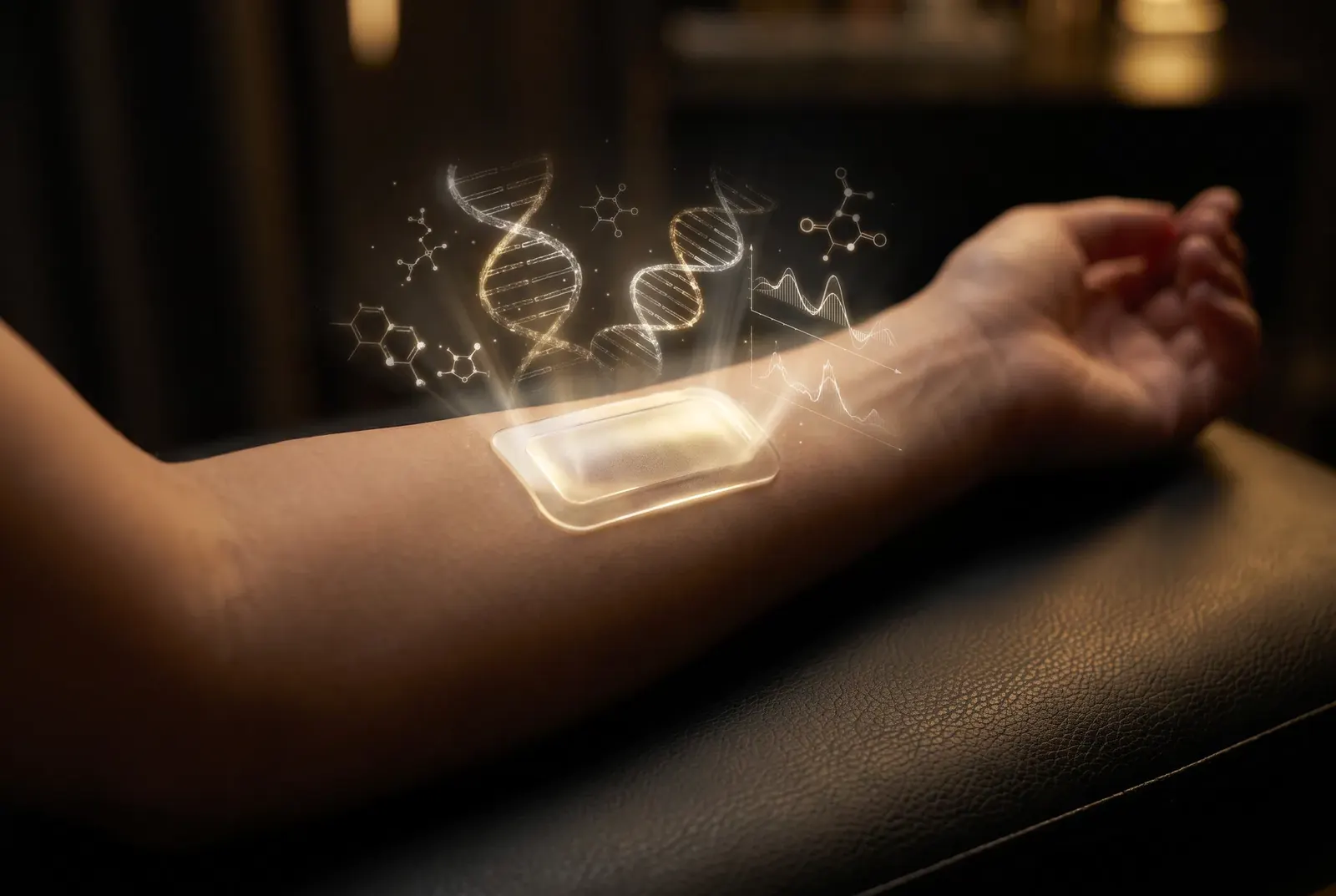
A wearable, wireless, battery-free patch for continuous 21-day monitoring. It measures cortisol (stress and HPA axis), glucose (metabolic health), lactate (cellular exertion), and urea (kidney function) simultaneously from sweat, without blood draws. Chronic cortisol elevation degrades collagen and impairs barrier function. Continuous monitoring reveals stress patterns invisible to single-timepoint blood tests, and shows whether lifestyle interventions are actually working.
Pharmacogenomic retinol sensitivity panel
A genetic analysis run through a pharmacogenomics laboratory, covering genes including CYP26A1, FLG, RARG, CRABP2, and retinoid receptor variants. It measures your genetic predisposition to retinol-induced irritation, including variants affecting skin barrier function, retinoid metabolism, and inflammatory response pathways, based on research identifying key genetic markers associated with retinol intolerance (Kang et al., 2021). The insight matters: some patients should not use retinol, because their genetics predispose them to chronic barrier disruption that worsens the inflammaging cycle. Pharmacogenomic testing before prescribing prevents months of damage and redirects to alternatives that actually work for their skin.
Book the physician consultation. $499 includes your TruAge biological age test. Deposit applied to further testing. Book now →
The wrong protocol does not just fail. It makes things worse.
This is why catching it early and seeking the right professional matters so much. Messing up the depth, the sequence, or the protocol when internal factors are unaddressed can set patients back months, sometimes permanently.
- Wrong depth means worse outcomes. Treating skin at aggressive depths when internal inflammation is uncontrolled can trigger post-inflammatory hyperpigmentation, prolonged erythema, or paradoxical worsening.
- Retinol is not universal. Genetic variants in retinoid metabolism and barrier function genes (CYP26A1, FLG, RARG, CRABP2) predispose some patients to chronic retinol-induced barrier disruption. For these patients, retinol accelerates the very inflammaging it is meant to prevent.
- Ignoring internal factors. A patient with subclinical thyroid dysfunction, gut dysbiosis, or liver stress will not respond to laser the way a healthy patient does. The collagen synthesis machinery requires internal resources.
- One-size protocols fail. Without measurement, practitioners default to population averages. But your biological age, oxidative stress, and genetic profile are unique, and they determine whether a treatment helps or harms.
If an organ is faltering, your skin cannot deliver its best
This is the missing piece most clinics ignore. When one of your internal systems is starting to falter, it becomes the reason you are not getting the results you expect from lasers, energy devices, or topical protocols. We measure so we can correct first what is going to be holding both you and your skin back from the best outcomes, inside and out.
| System | How it holds your skin back |
|---|---|
| Liver | Impaired collagen synthesis leads to poor laser recovery and slow wound healing |
| Gut | Dysbiosis drives systemic inflammation, poor treatment response, and chronic redness |
| Thyroid | Dysfunction causes dry skin and a poor barrier; treatments become less effective and more irritating |
| Kidneys | Urea buildup produces skin irritation, impaired healing, and unpredictable reactions |
| Hormones | Imbalance dysregulates melanocytes, causing unpredictable pigmentation after laser |
Our longevity platform: measure, correct, then treat
Our platform connects internal longevity testing with skin-specific diagnostics into a single, physician-directed protocol. Everything is connected, and we treat it that way.
- Measure. Comprehensive internal and skin-specific diagnostics: PAOT, mtDNA damage, epigenetic age, organ-system assessment, genetic sensitivity profiling.
- Identify. Pinpoint the internal bottlenecks: which organs are aging faster, where inflammation originates, what your skin cannot tolerate genetically.
- Correct. Address the internal factors first (gut health, hormonal balance, antioxidant reserves, barrier repair) so the treatment bed is optimized.
- Treat. Now, and only now, apply the right laser depth, the right energy protocol, the right topical sequence. At the right time, for your specific biology.
- Monitor. Track progress with repeat diagnostics. Adjust protocols based on objective data, not subjective assessment. Prove the intervention is working.
Catching it early changes everything
The inflammaging axis does not announce itself with dramatic symptoms. It builds silently: a slightly compromised barrier here, elevated oxidative stress there, a gut imbalance that manifests as "stubborn" skin that does not respond to treatments the way it should.
By the time most patients seek help, the internal factors have been compounding for years. Their skin has been broadcasting inflammation systemically, accelerating aging in organs they cannot see. The earlier we measure, the earlier we intervene, and the more reversible the damage.
This is why we test before we treat. A patient who walks in asking for a laser may actually need gut repair, hormonal optimization, or antioxidant repletion first. Without measurement, we would never know, and the laser would underperform or, worse, trigger a cascade of inflammation in already-compromised tissue.
Fellowship-level precision. This is one of the conditions we discuss extensively and teach our fellows, who come to train with us after they have already become cosmetic specialists. The integration of internal longevity medicine with dermal restoration is not taught in residency. It requires understanding the bidirectional relationship between skin and systemic health at a level most practitioners never encounter.
Frequently asked questions
Can my skin really be aging me internally?
Yes. A 2026 GeroScience review confirmed that a compromised skin barrier releases pro-inflammatory cytokines (TNF-α, IL-1β, IL-6) into systemic circulation, contributing to cardiovascular disease, diabetes, and neurodegeneration. Your skin is both a mirror and a driver of internal aging.
What is the PAOT test and how does it help?
The PAOT (Photo Anti-Oxidant Test) is a non-invasive electrochemical measurement that quantifies your skin's total antioxidant power and oxidant stress levels in real time. Results take minutes and reveal whether your antioxidant defenses are sufficient, guiding decisions about supplementation and treatment intensity.
How do I know if I should not use retinol?
Pharmacogenomic testing can identify variants in genes associated with retinol metabolism and skin barrier function (including CYP26A1, FLG, RARG, and CRABP2). Some patients are genetically predisposed to chronic barrier disruption from retinol, which paradoxically accelerates inflammaging. Testing before prescribing prevents months of damage.
Why would internal organ health affect my skin treatments?
Skin treatments like lasers rely on your body's internal repair machinery: collagen synthesis (liver), inflammatory regulation (gut), hormonal signaling, and nutrient delivery. If any of these systems are compromised, treatment outcomes suffer regardless of how skilled the practitioner is.
What is a skin epigenetic clock?
A skin epigenetic clock measures DNA methylation patterns from a non-invasive tape-strip sample to determine your skin's biological age independent of your chronological age. A 2025 study validated this approach across 817 samples with roughly 4-year accuracy, enabling truly personalized treatment protocols.
How is this different from a regular dermatology appointment?
Standard dermatology treats what it sees on the surface. Our longevity-integrated approach measures internal factors (biological age, organ function, oxidative stress, genetic sensitivities) that determine treatment response, then corrects them before treating the skin. This is physician-directed longevity medicine, not reactive skin care.
Do I need all of these tests?
Not necessarily. During your consultation, we assess which diagnostics are most relevant based on your history, goals, and current skin presentation. Some patients need comprehensive panels; others benefit from targeted testing. The consultation determines the right starting point.
References
- Haykal D, Flament F. Skin as a sentinel and modulator of systemic aging. GeroScience. 2026.
- Ye L, et al. Topical applications of an emollient reduce circulating pro-inflammatory cytokine levels in chronically aged humans. J Eur Acad Dermatol Venereol. 2019;33(6):1187–1195.
- Joël P, et al. Electrochemical Methodology for Evaluating Skin Oxidative Stress Status (SOSS). Diseases. 2019;7(2):40.
- Birch-Machin MA, et al. Mitochondrial DNA damage as a biomarker for ultraviolet radiation exposure and oxidative stress. Br J Dermatol. 2013;169(Suppl 2):9–14.
- Menendez Vazquez A, et al. Epigenetic age predictors for non-invasive assessment of human skin. npj Aging. 2025;11:314.
- Kang S, et al. Anti-Irritant Strategy against Retinol Based on Genetic Analysis. Int J Mol Sci. 2021;22(24):13539.
- Esfandyarpour R, et al. In-situ regeneratable wearable molecular sweat sensing system. Nat Biomed Eng. 2026.
- Zhao Y, et al. The gut-skin axis: Emerging insights. Int J Mol Med. 2025.
- DelaO-Escamilla A, et al. Epigenetic Clocks in Skin Aging. Genes. 2025.
- Bienkowska A, et al. Development of an epigenetic clock to predict visual age progression. Front Aging. 2024.
- Clark KM, et al. Recent advances in skin-interfaced wearable sweat sensors. Anal Chem. 2023.
- Moqri M, et al. Biomarkers of aging for identification and evaluation of longevity interventions. Cell. 2023;186(18):3758–3775.
All clinical figures are drawn from the peer-reviewed literature cited above.
Where this fits at Sajic Longevity. A physician assessment at our Guelph clinic, serving Toronto and the GTA maps your internal health alongside your skin biology, identifying the factors holding both you and your skin back. We measure, we correct, we treat, in that order. Explore our diagnostics, then book a consultation or call 1-888-430-4665.
Replace guessing with your own numbers.
Biological age, inflammation, oxidative load: every one of these is testable. Start there.
Precision diagnostics
150+ biomarkers, TruAge epigenetic age, and a physician who reads them.
Read more → BookBook the physician consultation
$499 includes your TruAge biological age test. Deposit applied to further testing.
Book now → Shop Sajic Skin ScienceGMA7 Ultimate Protection Set
The topical foundation while the internal work happens.
Shop now →Not sure which is right for you? Call 1-888-430-4665 or email consult@sajicskin.com and our team will point you to the right starting point.
This article is for education and general information only. It is not medical advice, does not establish a physician-patient relationship, and should not replace consultation with a qualified healthcare provider. Individual results vary. Treatment decisions are made only after an individual assessment.