Zombie Cells: What They Are, Why They Matter, and How to Clear Them

They stop dividing but refuse to die, and they poison every cell around them. The science of clearing senescent cells is finally reaching humans. Here is what the headlines get right, what they skip, and what our own data shows.
What are zombie cells, and why does your body keep them?
Cellular senescence is not a disease. It is a defense mechanism. When DNA damage threatens to turn a cell cancerous, senescence locks it in permanent arrest. The problem is what happens next: these arrested cells do not get cleared. They accumulate. And they secrete inflammatory signals that accelerate aging, degrade tissue, and paradoxically create the very environment where cancer can emerge.
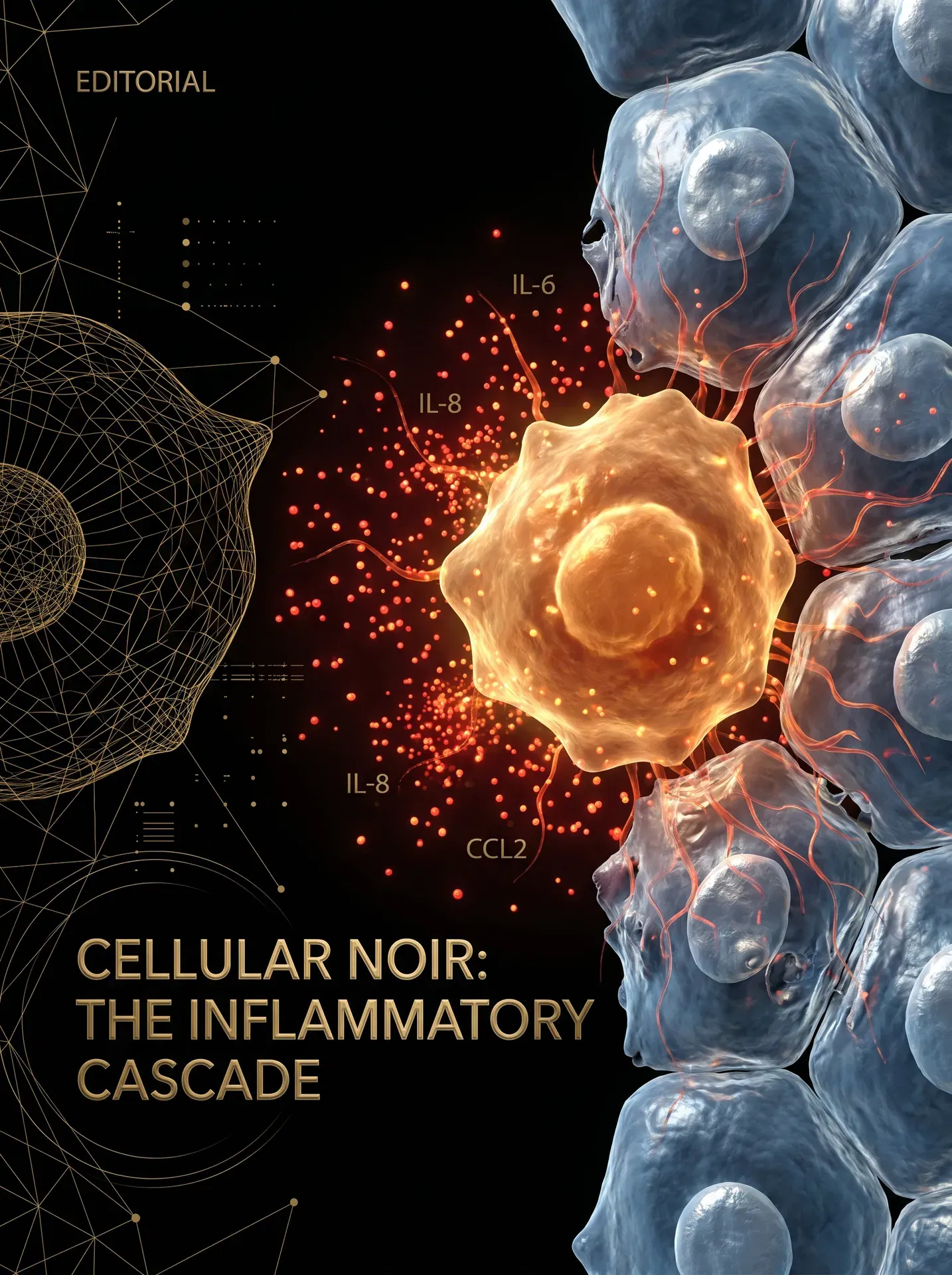
- They stop dividing. When a cell accumulates too much damage, from UV, oxidative stress, or telomere shortening, it enters permanent cell-cycle arrest. This is cellular senescence: a safety brake that prevents damaged cells from becoming cancerous.
- They refuse to die. Unlike normal damaged cells that undergo apoptosis (programmed cell death), senescent cells resist death signals. They persist in tissue indefinitely and accumulate with age, which is why they are called zombie cells.
- They poison their neighbours. Zombie cells secrete a toxic cocktail called the SASP (Senescence-Associated Secretory Phenotype): inflammatory cytokines like IL-6, IL-8, and CCL2, plus matrix-degrading enzymes that damage surrounding healthy tissue.
By age 60, senescent cells can comprise 15–20% of cells in sun-exposed skin, silently driving inflammation, collagen loss, and immune suppression.
Why zombie cells are not just an aging problem
Senescent cells do not sit quietly. Their SASP output is a broadcast signal that corrupts surrounding tissue. In skin, this means accelerated wrinkles, impaired wound healing, and a microenvironment primed for cancer. Systemically, it means chronic inflammation driving every major age-related disease.
- Chronic inflammation. SASP factors (IL-6, IL-8, TNF-alpha) create a persistent low-grade inflammatory state known as inflammaging, which drives cardiovascular disease, neurodegeneration, and metabolic dysfunction.
- Collagen degradation. Senescent fibroblasts secrete matrix metalloproteinases (MMP-1, MMP-3) that actively break down collagen and elastin, the structural proteins that keep skin firm and resilient.
- Immune suppression. The SASP suppresses the natural killer cells and T-cells that normally clear pre-cancerous cells, creating a microenvironment where early tumours can escape immune surveillance.
- Cancer promotion. Paradoxically, the same senescence that prevents one cell from becoming cancerous creates a tissue environment that promotes cancer in neighbouring cells, through growth factors, angiogenesis signals, and immune evasion.
- Neurodegeneration. Senescent glial cells in the brain release neuroinflammatory SASP factors linked to Alzheimer's and Parkinson's disease progression in preclinical models.
- Vascular aging. Senescent endothelial cells stiffen arteries, promote atherosclerosis, and impair vascular repair, contributing to hypertension and cardiovascular events.
Book the physician consultation. Includes TruAge epigenetic testing. Deposit applied to further diagnostics. Book now →
"First human proof a supplement kills zombie cells": what the headline skips
In July 2026, Qualia Life Sciences published the first peer-reviewed human proteomics data on a commercial senolytic supplement (Qualia Senolytic, a fisetin plus dasatinib-analog blend) in the International Journal of Molecular Sciences. The results are real. But the framing requires context.
What the study showed: in healthy adults aged 45–78, proteomics analysis after a single 2-day course found significant reductions in four SASP proteins (CCL8, CXCL9, CXCL10, CXCL11), the inflammatory signals zombie cells release. It also found reductions in CCL2 and increases in VEGFA, CSF2, and HGF, proteins associated with tissue repair and renewal. This is the first peer-reviewed human proteomics data on a commercial senolytic supplement.
What the headline skips:
- It was a single-arm pilot, with no control group and no placebo.
- The company studied its own product, a clear conflict of interest.
- The authors themselves call the results "exploratory."
- The findings are pre-statistical-adjustment. Markers moved, but this is a signal, not proof.
Keep the claim in proportion. A company studying its own product with no control group is like grading your own homework with no answer key. "Four markers moved in a pilot" is not the same as "this clears your zombie cells." The numbers moved; that is a signal. It is not proof.
The senolytic field in 2026: promising, but early
Senolytics are not science fiction. There are over 20 active clinical trials testing these drugs for age-related diseases. But we are still in the "promising signal" phase, not the "proven therapy" phase. Here is where the key agents stand.
| Agent | Status | Key findings | Source |
|---|---|---|---|
| Dasatinib + Quercetin (D+Q) | Phase 2 (multiple) | Reduced senescent cell burden in adipose tissue (diabetic kidney disease). Positive results for osteoporosis in older women (Mayo Clinic). 20+ ongoing trials. | Mayo Clinic / Cedars-Sinai |
| Fisetin | Phase 2 (AFFIRM trial) | Extends mouse lifespan by roughly 10%. Human trials ongoing for frailty and osteoarthritis; results pending. | Mayo Clinic |
| Senosensitizers (new class) | Preclinical (2026) | Enable senolytics to eliminate resistant zombie cells that survive initial treatment. Senolytics alone clear 30–70%; senosensitizers may push that higher. | Cedars-Sinai, Aging Cell 2026 |
| Navitoclax (ABT-263) | Phase 1/2 | Potent senolytic targeting the BCL-2 family. Effective but limited by platelet toxicity; being refined for targeted delivery. | Multiple institutions |
The key insight from Cedars-Sinai (February 2026): senolytics clear 30–70% of zombie cells, but the remaining "senolytic-resistant" cells have a distinct SASP profile and can be reactivated by infections. A new drug class called senosensitizers may enable deeper clearance. This is why a single supplement course is unlikely to clear all senescent cells.
Our research: GMA7 targets the same signals, from the skin surface
While oral senolytics aim to clear senescent cells systemically, our GMA7 technology takes a different approach: reducing the SASP signals and oxidative drivers that make zombie cells dangerous in the first place, directly in the skin where UV-induced senescence is most concentrated. GMA7 is part of our custom compounded skincare program.
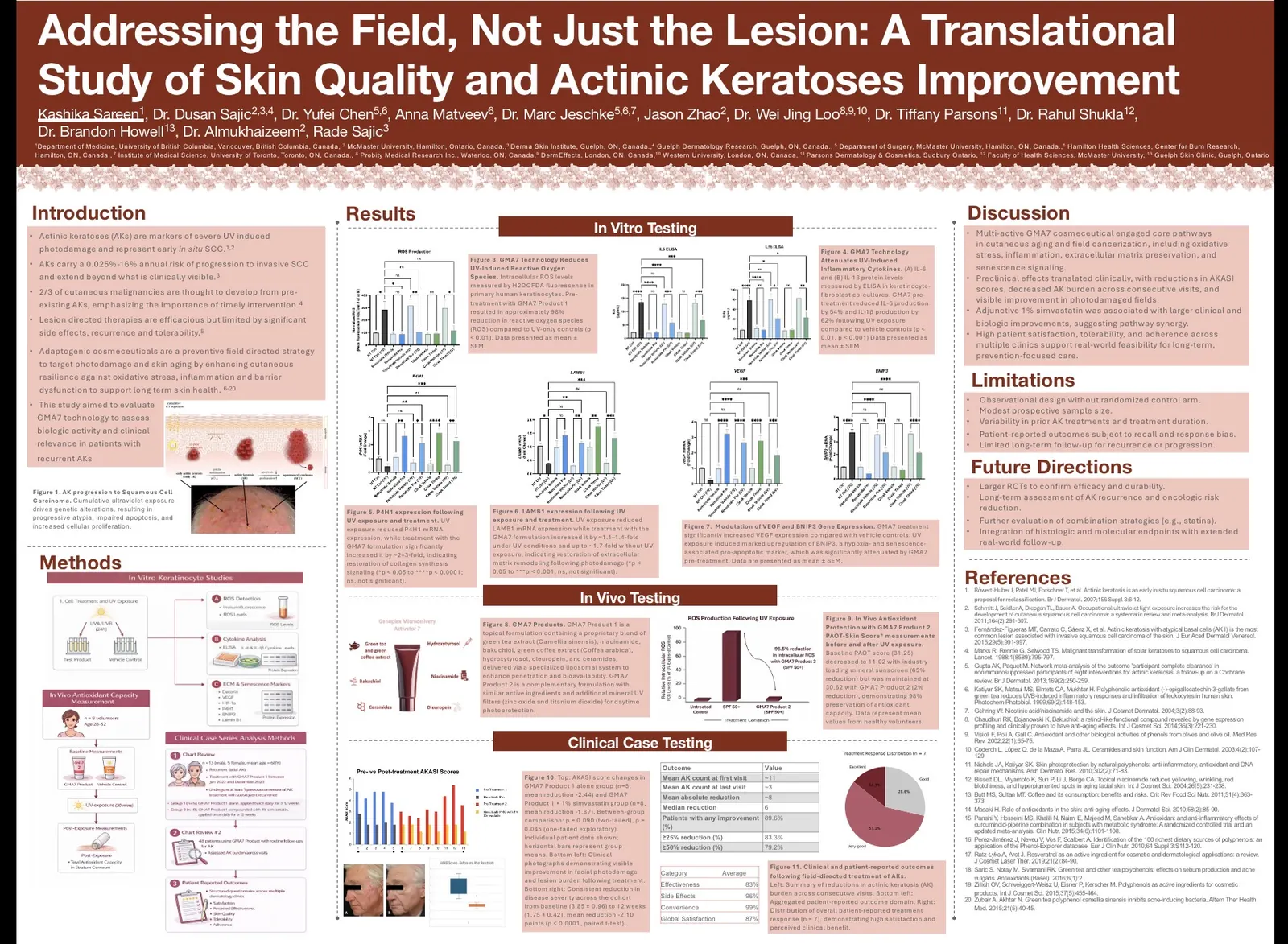
In translational research presented at dermatology conferences and published in peer-reviewed proceedings, GMA7 demonstrated significant attenuation of the core senescence-associated inflammatory cascade:
BNIP3, a senescence-associated pro-apoptotic marker upregulated by UV, was also significantly attenuated by GMA7 pre-treatment (p<0.05). In a clinical case series, 83.3% of patients achieved a 25% or greater reduction in actinic keratoses. This work is a multi-institutional collaboration (UBC, McMaster, Western, Guelph Dermatology Research), published as Sareen, Sajic et al.
Important context. GMA7 is a topical cosmeceutical that targets senescence-associated signalling in the skin. It is not an oral senolytic drug. The mechanism is complementary: while senolytics aim to kill zombie cells, GMA7 aims to reduce the inflammatory damage they cause and prevent new senescence from UV exposure. Both approaches have a role in a comprehensive skin-longevity strategy.
Not all zombie cells can be killed
The February 2026 Cedars-Sinai study (Kirkland et al., Aging Cell) revealed something critical. After senolytic treatment, 30–70% of zombie cells are cleared, but the remaining cells are senolytic-resistant. They carry a distinct SASP profile, and when activated by infections or inflammatory triggers, they can become more dangerous than before. In mice treated with D+Q, the remaining senescent cells showed less inflammatory SASP but could be reactivated into tissue-damaging cells by infections. Senosensitizers, the new drug class in development, aim to make these resistant cells vulnerable again.
Individual variation is equally real. Just as laser treatment shows non-responders in clinical data, senolytic response varies by person: genetics, baseline senescent burden, immune function, and lifestyle all influence how effectively your body clears zombie cells after treatment. A single supplement course, whether Qualia Senolytic, fisetin, or any other agent, is unlikely to clear your entire senescent cell burden. The only way to know whether an intervention is working for you is to measure it, before and after.
The only way to know it is working: measure it
Whether you are using a senolytic supplement, a topical like GMA7, fractional laser, or a combination, the question is the same: is it actually changing your biology? Not the average in a study, not the marketing claim, your individual response. At our clinic we quantify senescence-associated damage before any intervention, then track response longitudinally through our diagnostics program.
- VISIA Complexion Analysis. Multi-spectral imaging that quantifies UV damage, porphyrins, and sub-surface inflammation invisible to the naked eye. It establishes your baseline senescent damage burden before any intervention.
- Evolab Insight. Measures barrier function, elasticity, hydration, and transepidermal water loss at the biophysical level, tracking whether interventions are restoring tissue function, not just appearance.
- Skin Life Analytics. An integrated platform producing a composite biological skin-age score tracked longitudinally over time. It is how you know, rather than guess, whether your senescence-targeting strategy is working.
- PAOT Skin Score. Measures the in-vivo antioxidant capacity of the skin, the body's defense against ROS-driven senescence. Our data shows GMA7 preserves 88% of antioxidant capacity, versus 65% with industry-leading alternatives.
The strategy: a multi-layer approach
Given that senolytics clear only 30–70% of zombie cells and resistant populations remain, the most rational approach is layered: prevent new senescence, clear existing damage, and measure response to confirm it is working.
- GMA7 topical (daily). Reduces SASP signalling (IL-6, IL-8), ROS, and BNIP3 at the skin surface, preventing new senescence from UV exposure while attenuating existing zombie-cell damage.
- Fractional laser (periodic). Clears DNA-damaged cells, stimulates collagen remodelling, and has been shown to reduce skin cancer occurrence (J Clin Invest 2021). It complements topical senescence reduction. See our CO2 laser page.
- Oral senolytics (emerging, physician-guided). Fisetin, D+Q, and next-generation agents show promise for systemic senescent cell clearance. Still exploratory, and they require medical supervision and measurement.
- Lifestyle senolytic support. Exercise is a proven senolytic: regular physical activity clears senescent cells via immune activation. Fasting, sleep optimization, and stress reduction also support clearance pathways.
- Sun protection (prevention). UV radiation is the number one driver of premature senescence in skin. Broad-spectrum protection prevents new zombie cells from forming; the most effective senolytic is prevention. Our skin cancer prevention page covers this in depth.
- Longitudinal measurement. VISIA, Evolab, and Skin Life Analytics tracked over time: the only way to know whether your combination strategy is working for your biology.
Frequently asked questions
What exactly are zombie cells?
Zombie cells (senescent cells) are cells that have stopped dividing due to accumulated damage but refuse to undergo programmed cell death (apoptosis). They persist in tissue and secrete inflammatory signals called the SASP (Senescence-Associated Secretory Phenotype), including IL-6, IL-8, CCL2, and matrix metalloproteinases, that damage surrounding healthy tissue, degrade collagen, suppress immune function, and create a microenvironment favourable for cancer.
Is the Qualia Senolytic study real proof that supplements kill zombie cells?
The study (Int. J. Mol. Sci., July 2026) showed that SASP-associated protein markers (CCL8, CXCL9, CXCL10, CXCL11) decreased after a 2-day course in healthy adults aged 45–78. This is a real signal from a real human study. However, it was a single-arm pilot with no control group or placebo, conducted by the product's manufacturer, and the authors themselves call the results "exploratory." A signal is a reason to watch. It is not proof that the supplement clears your zombie cells.
How does GMA7 relate to senolytics?
GMA7 is a topical cosmeceutical that targets senescence-associated signalling in the skin; it is not an oral senolytic drug. While senolytics aim to kill zombie cells, GMA7 reduces the inflammatory damage they cause (a 94% IL-6 reduction and 82% IL-8 reduction in our translational data) and prevents new senescence from UV exposure (an 88% ROS reduction). The approaches are complementary: senolytics clear existing zombie cells, while GMA7 reduces their toxic output and prevents new ones from forming.
Why can't senolytics clear all zombie cells?
Research from Cedars-Sinai (Kirkland et al., Aging Cell 2026) showed that senolytics clear 30–70% of senescent cells, but the remaining cells are senolytic-resistant, with a distinct SASP profile. These resistant cells can be reactivated into tissue-damaging cells by infections. A new class of drugs called senosensitizers is being developed to make resistant cells vulnerable to senolytics, but this work is still preclinical.
How do you measure whether zombie cells are being cleared?
We use multi-spectral imaging (VISIA) to quantify UV damage and sub-surface inflammation, Evolab Insight to measure barrier function and elasticity, the PAOT Skin Score to assess antioxidant capacity, and our integrated Skin Life Analytics platform for a composite biological age score. These are tracked longitudinally, before, during, and after any intervention, so we can objectively determine whether your senescent cell burden is decreasing.
Should I take a senolytic supplement right now?
The science is promising but early. If you are considering a senolytic supplement, we recommend: (1) getting a baseline measurement of your senescent damage burden first, (2) working with a physician who understands the field, (3) measuring again after treatment to see whether markers actually moved for you, and (4) understanding that a single 2-day course is unlikely to clear your entire senescent cell population. Do not buy the proof before the proof exists, but do stay engaged with the science.
Sources
- Tripathi U, et al. Senolytic-Resistant Senescent Cells Have a Distinct SASP Profile and Functional Impact: The Path to Developing Senosensitizers. Aging Cell. 2025/2026. DOI: 10.1111/acel.70358
- Qualia Life Sciences. Exploratory Effects of a Novel Nutraceutical on Senescence-Related Protein Biomarkers. Int. J. Mol. Sci. 2026. (NCT06953518)
- Sareen K, Sajic D, et al. Addressing the Field, Not Just the Lesion: A Translational Study of Skin Quality and Actinic Keratoses Improvement. Conference proceedings.
- Fitsiou E, et al. Cellular Senescence and the Senescence-Associated Secretory Phenotype as Drivers of Skin Photoaging. J Invest Dermatol. 2021;141(4S):1119–1126.
- Kirkland JL, Tchkonia T. Senolytic drugs: from discovery to translation. J Intern Med. 2020;288(5):518–536.
- Fu TE, et al. Senescent cells as a target for anti-aging interventions. PMC. 2025.
- Chin T, et al. The role of cellular senescence in skin aging and age-related skin pathologies. Front Physiol. 2023;14:1297637.
Where this fits at Sajic Longevity. Do not buy the proof before the proof exists. Start by quantifying your skin's current senescent damage, including UV burden, inflammatory markers, barrier function, and biological age, and build a measured, evidence-based strategy from there. Book a consultation or call 1-888-430-4665.
Quantify the damage before you buy the cure.
Senolytics are coming. The useful step today is measuring your UV burden, inflammation and biological age so you know what to clear.
Precision diagnostics
Biological age, inflammation and oxidative stress, mapped by a physician.
Read more → BookBook the physician consultation
Includes TruAge epigenetic testing. Deposit applied to further diagnostics.
Book now → Shop Sajic Skin ScienceProtectif mineral SPF 50+
UV is the largest driver of senescent skin cells. Stop adding to the load.
Shop now →Not sure which is right for you? Call 1-888-430-4665 or email consult@sajicskin.com and our team will point you to the right starting point.
This article is for education and general information only. It is not medical advice, does not establish a physician-patient relationship, and should not replace consultation with a qualified healthcare provider. Individual results vary. Treatment decisions are made only after an individual assessment.