A Sunburn on Your Back Could Be Fueling Cancer on Your Toe
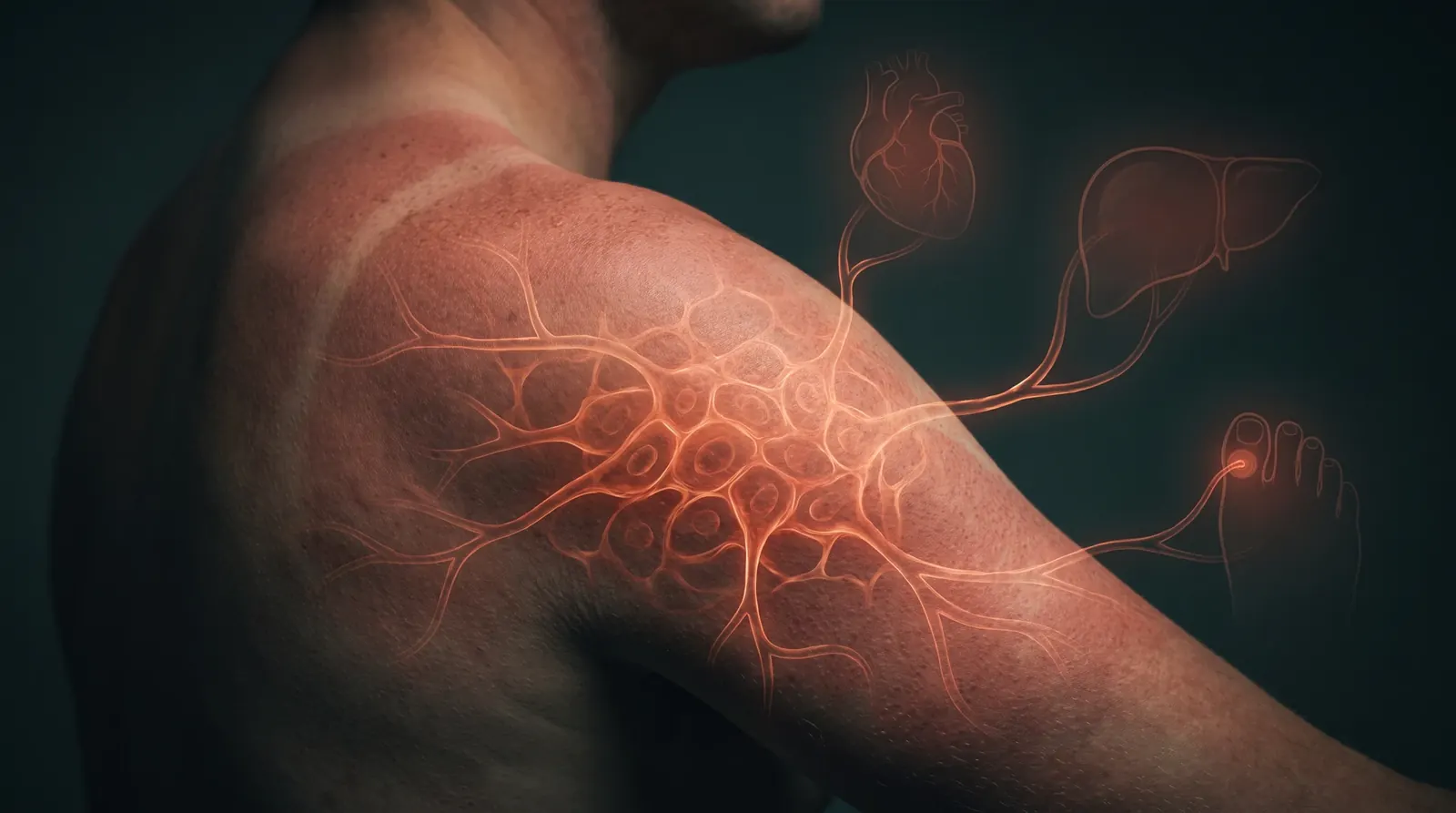
Rogue zombie cells don't stay where they're made. They broadcast inflammatory signals that travel through your blood — reaching your heart, liver, and distant skin. This is the systemic SASP hypothesis, and it changes everything about how we think about sun damage.
I Had Skin Cancer. Then I Had Autoimmune Disease.
I'm not writing this from a textbook. I lived it. I had skin cancer in my 30s — caught early, treated, but the experience shattered the illusion that I was somehow immune. Then came the autoimmune disease. My own immune system turning against me.
That combination — cancer AND autoimmune — forced me to ask a different question. Not just “how do I treat this?” but “what is happening inside me that let both of these develop?”
The answer I found was inflammation. Zombie cells. A failing immune surveillance system. And the realization that most doctors weren't measuring any of it. They were waiting for disease to announce itself — then reacting.
I decided to stop guessing and start tracking. Now it's all about the measurement — seeing how my internal system is doing, making sure I'm on top of it. From regular bloodwork to the tests your doctors wouldn't normally order.
The VillainZombie Cells: The Enemy You Can't See
When UV radiation damages your skin cells beyond repair, they don't always die. Some enter a state called cellular senescence — they stop dividing but refuse to self-destruct. They become zombie cells.
- They refuse to die
- Normal cell death (apoptosis) is blocked
- They broadcast inflammation
- SASP factors: IL-6, IL-1β, TNF-α, MMPs
- They corrupt neighbors
- Paracrine signaling spreads senescence
Here's what most people don't know: these zombie cells don't just damage the skin where they live. They secrete what scientists call the Senescence-Associated Secretory Phenotype (SASP) — a cocktail of inflammatory proteins that enters your bloodstream.
Zombie cells don't stay quiet. They broadcast. And your body is listening.
Book CO2 at deRMA Skin Institute. Ablative fractional CO2 clears senescent fibroblasts from sun-damaged skin. Delivered personally by Dr. Sajic in Guelph. Book now →
Your Back's Sunburn Talks to Your Entire Body
“This is a hypothesis — biologically coherent, supported by animal models, but not yet proven in humans as a direct causal chain. We present it because it changes how you should think about protection and prevention.”
— Transparency note
In a landmark 1985 experiment, researchers irradiated the bellies of mice with UVB. Then they applied a tumor promoter to the backs — skin that was never exposed to UV. The result: tumors developed on the backs only when the bellies had been irradiated. UV somewhere else made cancer possible everywhere.
- UV hits your back → creates senescent zombie cells locally
- Zombie cells secrete SASP (IL-6, IL-1β, MMPs, extracellular vesicles)
- SASP enters your bloodstream → travels systemically
- At distant sites: suppresses immune surveillance, promotes angiogenesis, creates a pro-tumor niche
- A pre-existing mutation at a distant site (toe, liver, heart) now has permission to grow
A 2026 study in Nature Aging showed that extracellular vesicles from senescent liver cells (hepatocytes) travel through the blood and enhance invasiveness and metastasis across multiple tumor types in aged mice — reversible with senolytics (dasatinib + quercetin).
The mutation doesn't travel. But the permission does. UV doesn't need to directly mutate your toe to cause cancer there. It just needs to suppress the immune system that was keeping that pre-existing mutation in check.
Beyond MutationIt's Not Just the Mutation. It's the Environment.
The number one cause of cancer beyond UV? Aging itself. Number two? Loss of immune function. We see this most dramatically in transplant patients.
The Transplant Patient Proof
Organ transplant recipients on immunosuppressive drugs have a 65–100x increased risk of skin cancer. Not because they get more UV. Because their immune system can no longer patrol and destroy abnormal cells.
Wheless et al., PMC 2014; UCSF Health; Kuschal et al., 2012 (200-fold with calcineurin inhibitors)
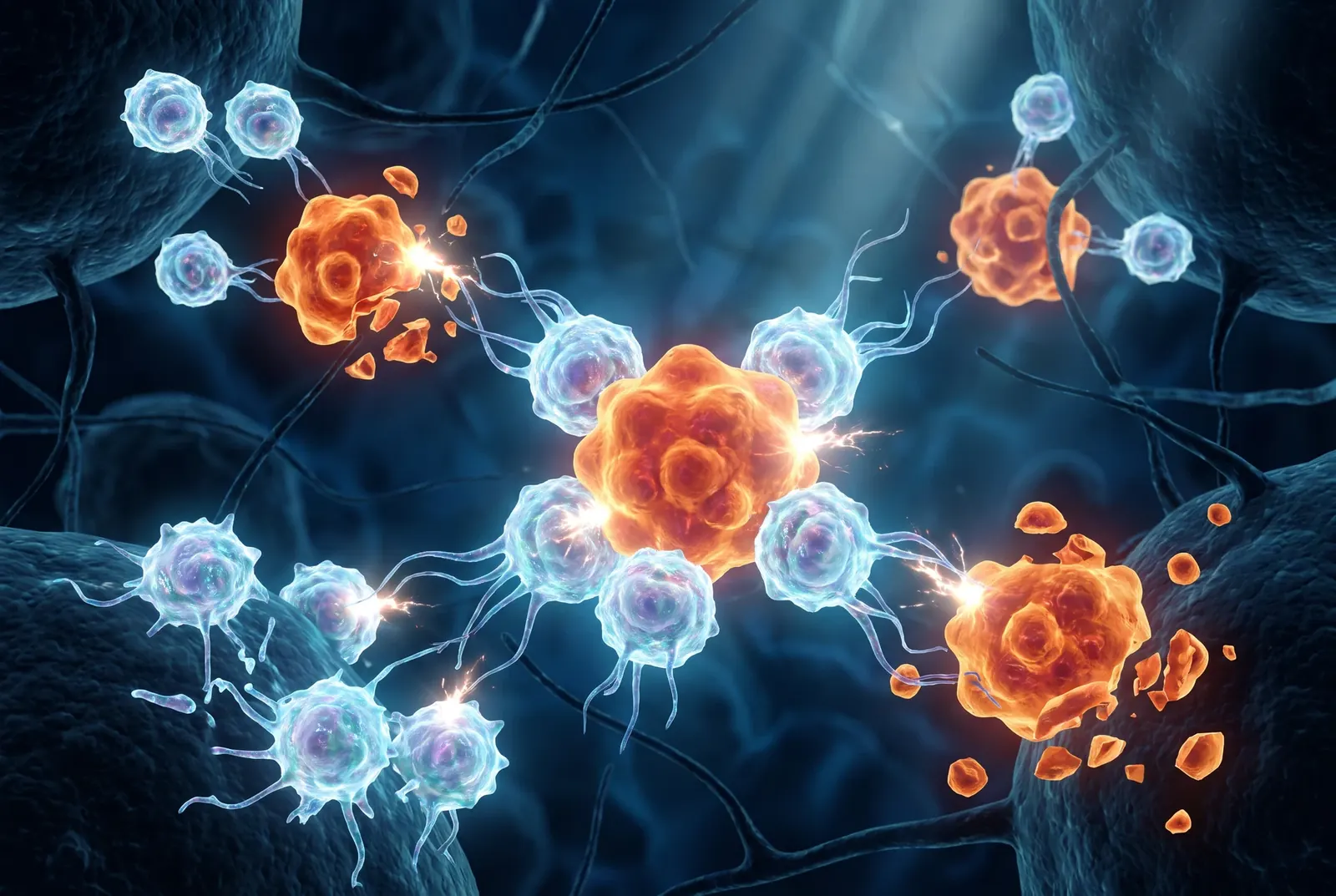
If suppressing the immune system causes cancer, then the opposite must also be true:keeping your immune system healthy, strong, and clearing out zombie cells makes you more resilient. This is what I've spent my career on.
It's not just the mutation that drives cancer further — it's the inflammation, the immune evasion, the zombie cell burden that creates the permissive environment. Target those, and you change the odds.
If immune decline drives cancer, then immune strength is prevention. We measure both.
The Solution StackBuilding Resilience From the Inside Out
If inflammation and immune decline are the real drivers, then the solution isn't just avoiding the sun. It's building a body that can handle what life throws at it.
Reduce Inflammation
- Anti-inflammatory nutrition (omega-3, polyphenols, fiber)
- Regular exercise (lowers IL-6, TNF-α)
- Stress reduction (cortisol drives chronic inflammation)
- Avoid toxins: cigarettes, excess alcohol, processed foods
- Sleep optimization (7-9 hours — immune repair happens during sleep)
Strengthen Immune Surveillance
- Exercise (NK cell activity increases 40-60% post-exercise)
- Adequate vitamin D (immune modulation)
- Zinc and selenium (T-cell function)
- Avoid immunosuppressive behaviors (chronic stress, sleep deprivation)
- Consider senolytics: fisetin, quercetin (clearing zombie cell burden)
Protect & Repair DNA
- Beyond just vitamin C and retinol — those are the basics
- DNA repair enzymes (photolyase, endonuclease)
- GMA7 complex: targets 7 of the 12 hallmarks of aging in skin
- Antioxidant reserves (PAOT testing to measure your capacity)
- Sunscreen that actually blocks the full UV + visible light spectrum
CO2 Laser: Clearing Zombie Cells From Sun-Damaged Skin
Here's where it gets interesting. Ablative fractional CO2 laser doesn't just resurface your skin cosmetically. Research shows it:
Removes senescent fibroblasts from the dermis (Chen et al., 2019)
Normalizes pro-carcinogenic UVB responses in treated skin
Inhibits fibroblast senescence via SMAD3 induction (Patsnap, 2026)
Reduces density of MMP-9 and IL-6 — both SASP components
Treats field cancerization (clearing pre-cancerous actinic keratoses)
The hypothesis: If CO2 laser clears zombie cells from previously sun-exposed sites, it may be reducing the systemic SASP burden — potentially decreasing cancer promotion at distant sites too. You're not just treating the skin you can see. You may be protecting organs you can't.
Don't want the downtime of CO2? Start with the skincare. DNA repair serums and senescence-targeting actives can begin the process topically. Then escalate to laser when you're ready.
Measure. Don't Guess.
The Tests Your Doctor Won't Order
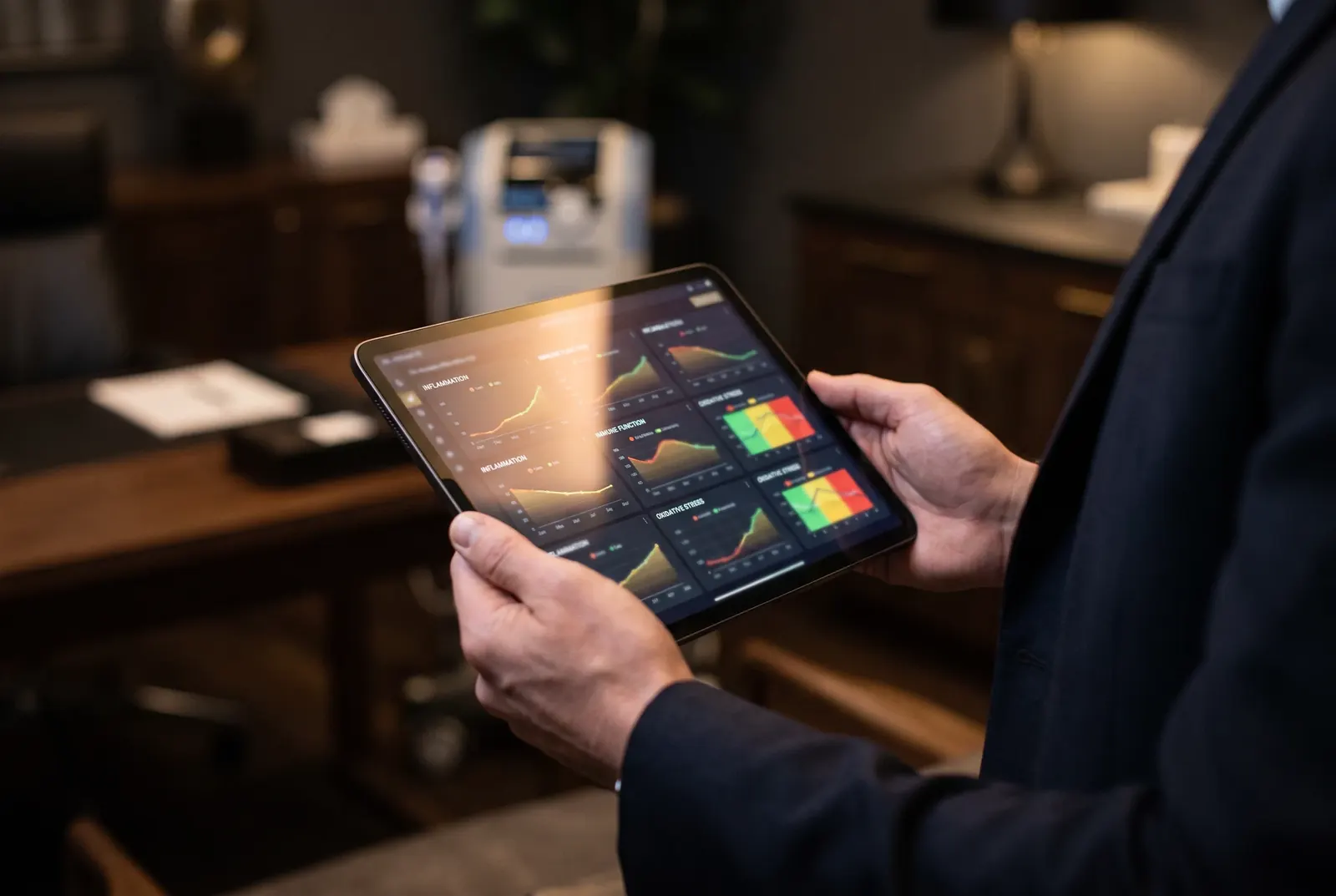
Standard bloodwork checks cholesterol and glucose. It doesn't check whether your immune system is winning the war against zombie cells. These are the markers we track:
hs-CRP
Systemic inflammation marker
Elevated in chronic senescence burden
IL-6
Pro-inflammatory cytokine (SASP component)
Directly secreted by zombie cells
TNF-α
Tumor necrosis factor
Drives immune evasion and tumor promotion
NK Cell Activity
Natural killer cell function
First-line defense against cancer cells
PAOT Score
Antioxidant reserve capacity
Measures ability to neutralize oxidative damage
TruAge / Epigenetic Clock
Biological vs chronological age
Senescence burden accelerates biological aging
Vitamin D (25-OH)
Immune modulation
Deficiency impairs T-cell and NK cell function
Homocysteine
Methylation and inflammation
Elevated = impaired DNA repair capacity. This isn't about being paranoid. It's about being informed. When you can see your inflammatory markers trending up, you can intervene before disease develops. That's the difference between reactive medicine and proactive longevity.
Beyond the Basics
Skin Protection Beyond Vitamin C and Retinol
Vitamin C and retinol are the starting point. But if zombie cells are broadcasting systemic damage, you need protection that works at the DNA level — not just the surface.
GMA7 Complex & the 12 Hallmarks
Our research targets inflammation — one of the 12 hallmarks of aging — directly in the skin. The GMA7 complex addresses genomic instability, mitochondrial dysfunction, cellular senescence, altered intercellular communication, loss of proteostasis, deregulated nutrient sensing, and chronic inflammation. We're not just treating wrinkles. We're targeting the molecular machinery that lets zombie cells thrive.
DNA Repair Serums
Photolyase and endonuclease-based repair enzymes can reverse pyrimidine dimer damage — the same molecular trigger that causes systemic immunosuppression. Applied topically, they've been shown to prevent UV-induced immune suppression in animal models. Our Rejuvenat serum incorporates DNA repair technology alongside the GMA7 hallmarks-targeting complex.
Systemic Support
Senolytics like fisetin and quercetin are being studied for their ability to clear zombie cells systemically. Dasatinib + quercetin was the first senolytic combination tested in humans (Lancet, 2019), showing decreased senescent cell burden in diabetic kidney disease patients. We're entering an era where you can target these cells from both outside (laser, topicals) and inside (senolytics, immune support).
We're constantly completing this picture and testing — that's the whole point. To improve it even more. Sometimes not even just visually, but molecularly. The skincare you use today should be doing more than making you look good. It should be making your cells more resilient.
The New EraTrue Longevity: Laser + Systemic + Measurement
The ideal approach isn't one thing. It's the combination:
TopicalDNA repair serums, GMA7 complex, broad-spectrum protection
LaserCO2 fractional clearing zombie cells from field cancerization sites
SystemicSenolytics, anti-inflammatory nutrition, immune support supplements
MeasurementInflammatory markers, immune panels, epigenetic clocks, PAOT
We now have clinical trials looking at true aging reversal — epigenetic reprogramming, senolytic cocktails, immune rejuvenation. This isn't science fiction anymore. It's the next decade of medicine. And it starts with knowing where you stand today.
Longevity & concierge medicine
Zombie Cells & Systemic SASP: FAQ
Straight answers on senescent cells, UV damage, CO2 laser, immune function, and what you can do now.
Can a sunburn on my back really cause cancer on my toe?
The UV mutation itself is local — it only forms where photons hit. But the inflammatory signaling (SASP) from zombie cells created by that sunburn can travel systemically through your blood. Animal studies show UV at one site promotes tumor development at distant, unexposed sites through immunosuppression. This is a promotion/permissive mechanism, not direct mutagenesis at the distant site.
What are zombie cells exactly?
Zombie cells (senescent cells) are damaged cells that stop dividing but refuse to die via normal apoptosis. They accumulate with age and UV exposure, secreting inflammatory proteins (SASP) including IL-6, IL-1β, TNF-α, and matrix metalloproteinases. These signals damage surrounding tissue, suppress immune function, and create pro-tumor environments.
Does CO2 laser actually clear senescent cells?
Yes. Research shows ablative fractional CO2 laser removes senescent fibroblasts from the dermis and normalizes pro-carcinogenic UV responses (Chen et al., 2019). It also inhibits fibroblast senescence via SMAD3 induction and reduces SASP components like MMP-9 and IL-6. It is being studied as a field cancerization treatment beyond just cosmetic resurfacing.
What is the connection between immune function and cancer?
Organ transplant patients on immunosuppressive drugs have 65-100x higher skin cancer risk — proving that immune surveillance is critical for cancer prevention. As we age, immunosenescence (declining immune function) impairs our ability to detect and destroy abnormal cells. Strengthening immune function and clearing zombie cells that suppress immunity is a logical prevention strategy.
What bloodwork should I be getting that my doctor doesn't order?
Beyond standard panels: hs-CRP (systemic inflammation), IL-6 (SASP marker), NK cell activity (cancer surveillance), PAOT score (antioxidant reserves), TruAge epigenetic clock (biological age), vitamin D, homocysteine, and a comprehensive immune panel. These markers tell you whether your body is winning or losing the war against senescence and inflammation.
Is this hypothesis or proven science?
Both. The individual links are proven: UV causes senescence (proven), senescent cells secrete SASP (proven), SASP travels systemically (proven, Nature Aging 2026), immunosuppression increases cancer (proven in transplant patients), CO2 laser clears senescent cells (proven). The full chain — that clearing skin zombie cells reduces distant cancer risk — is a biologically coherent hypothesis that we believe warrants proactive action while we await definitive human trials.
Sources & Citations
- [1] Strickland PT, Creasia D, Kripke ML. Enhancement of two-stage skin carcinogenesis by exposure of distant skin to UV radiation. J Natl Cancer Inst. 1985;74(5):1129-1134.
- [2] Kripke ML, Cox PA, Alas LG, Yarosh DB. Pyrimidine dimers in DNA initiate systemic immunosuppression in UV-irradiated mice. PNAS. 1992;89(16):7516-7520.
- [3] Li H, Zhao R, Wan L, et al. Extracellular vesicles derived from senescent hepatocytes drive pan-cancer metastasis in aging. Nature Aging. 2026.
- [4] Wheless L, et al. Skin cancer in organ transplant recipients: more than just sun. PMC. 2014. (20-100 fold increased risk)
- [5] Chen R, et al. Single ablative fractional resurfacing laser treatment results in removal of senescent fibroblasts. PMC. 2019.
- [6] Fitsiou E, Pulido T, Campisi J, Alimirah F, Demaria M. Cellular senescence and SASP as drivers of skin photoaging. J Invest Dermatol. 2021.
- [7] Ghosh K, Capell BC. The senescence-associated secretory phenotype: critical effector in skin cancer and aging. J Invest Dermatol. 2016;136(11):2133-2139.
- [8] Justice JN, et al. Senolytics in idiopathic pulmonary fibrosis: Results from a first-in-human, open-label, pilot study. EBioMedicine (Lancet). 2019;40:554-563.
- [9] Wang L, et al. Immunosenescence promotes cancer development. PMC. 2025.
- [10] Wenande E, et al. The evolving landscape of laser-based skin cancer prevention. Lasers Med Sci. 2025.
- [11] Bald T, Quast T, Landsberg J, et al. Ultraviolet-radiation-induced inflammation promotes angiotropism and metastasis in melanoma. Nature. 2014;507:109-113.
- [12] Zanders L, Arifaj D, Wagner JUG, Dimmeler S. Cellular senescence, inflammaging and cardiovascular disease. Immunol Rev. 2026.
Stop guessing. Start measuring.
A senescence assessment, CO2 laser consultation, longevity bloodwork, or a DNA-repair skincare protocol: we help you understand where you stand and what to do next.
Precision diagnostics
hs-CRP, IL-6, NK cell activity, PAOT and TruAge, read by a physician.
Read more → Book at the clinicBook CO2 at deRMA Skin Institute
Ablative fractional CO2 clears senescent fibroblasts from sun-damaged skin. Delivered personally by Dr. Sajic in Guelph.
Book now → Shop Sajic Skin ScienceProtect & Repair duo
Protectif SPF 50+ plus Rejuvenat DNA-repair serum: stop adding to the load, repair what is there.
Shop now →Not sure which is right for you? Call 1-888-430-4665 or email consult@sajicskin.com and our team will point you to the right starting point.
This article is for education and general information only. It is not medical advice, does not establish a physician-patient relationship, and should not replace consultation with a qualified physician. Individual results vary.