Most Supplements Are Wasted on Most People. Test First.
I say that as a physician who gives his longevity patients a written supplement protocol. Mine starts with your bloodwork, not a shopping list: test, build the base, then supplement only where a documented need shows up.

Should you take supplements without testing first? Usually not. Dr. Dusan Sajic, MD PhD, of Sajic Longevity builds a supplement protocol in three steps: test the bloodwork that can actually change a decision, build the base (training, sleep, protein from food, a varied diet), and only then add a short list of supplements for a documented reason. The same capsule can matter for one person and add nothing for another.
- Targeted tests can change a plan. More testing and more supplements are not automatically better.
- No capsule outruns the basics: strength training, seven-plus hours of sleep, enough protein and a varied diet.
- A practical protein starting point is 1.2 g per kg of body weight per day, from food first. Not 1 g per pound.
- 5,000 IU of vitamin D a day is above the usual 4,000 IU adult upper limit and belongs under medical supervision.
- Lowering homocysteine with B vitamins has not reliably lowered heart attacks or strokes. Treat the cause, not the number.
Why do most supplements get wasted?
Because they are bought before anyone asks a question. A shelf of capsules chosen from a podcast or a pharmacy aisle treats everyone the same, and most people are not deficient in what they are taking. Some are taking doses that are higher than the safe upper limit once you add up every product they use.
My protocol runs in the opposite order. First we find out what is actually low, high or worth a closer look. Then we make sure the foundations are doing their job. Only then do we talk about a short list of supplements, each with a reason, a dose, a timeline and a follow-up test.
Step 01 · TestWhich blood results actually change a supplement decision?
The same number can point to two different plans. The examples below are invented teaching scenarios, not targets and not your results. They show why the next question changes depending on the result.
| Test | Fictional result that prompts a review | What it changes | Fictional alternate result | What that means |
|---|---|---|---|---|
| Vitamin D · 25(OH)D | 32 nmol/L | A review of intake, risk factors and an appropriate replacement plan, not the same dose for everyone. | 70 nmol/L | Adding a high-dose product may be unnecessary. Consider current intake, calcium and the reason for testing rather than chasing a bigger number. |
| Ferritin · iron stores | 22 ng/mL | Look at the blood count, bleeding history, inflammation and possible poor absorption. A reason to investigate, not to assume more iron will fix it. | 95 ng/mL | Ferritin can rise with inflammation. On its own it cannot confirm healthy iron stores; the blood count and transferrin saturation add context. |
| Vitamin B12 | 135 pmol/L | Review diet, symptoms, medicines and absorption. Borderline cases may need confirmatory testing. A generic B-complex is not a substitute for investigating a deficiency. | 390 pmol/L | More B vitamins are not automatically useful. Existing supplements and symptoms still matter. |
| Homocysteine | 18 µmol/L | Consider B12 and folate status, kidney function, medicines and other causes. Lowering the marker does not automatically lower heart attack or stroke risk. | 9 µmol/L | Not a reason to add a daily high-dose B-complex. The supplement decision should follow a documented need. |
| hs-CRP · inflammation | 5.0 mg/L | Illness, injury and other conditions change this marker. Find the cause and repeat when appropriate. Do not treat a single result by buying fish oil. | 0.8 mg/L | Does not rule out disease or prove a supplement is working. It belongs alongside symptoms and cardiovascular risk. |
| HbA1c · glucose exposure | 6.1% | A clinician conversation about glucose, food, activity and follow-up. Some blood-cell conditions affect HbA1c. A supplement is not a diabetes plan. | 5.3% | Keep the foundations in place. HbA1c is one measurement, not proof that glucose-lowering supplements are needed. |
| Serum zinc | 8 µmol/L | Review diet, timing, inflammation and absorption. Serum zinc has limits; any replacement dose and duration should be individualized. | 12 µmol/L | Avoid stacking zinc across several products. Excess zinc can interfere with copper. |
These invented numbers are teaching examples, not recommended targets or a universal baseline panel. A review prompt is not a diagnosis, and a normal-looking result is not an "all clear". Symptoms, medicines, units, lab methods and the reason for testing all matter. Routine vitamin D screening is not recommended for every healthy adult.
Already have results? Bring them. We review what you have before deciding what else you need. For the full panel we use and what each test can and cannot tell you, read Your Labs Are Normal. That Was Never the Question.
Book a consultation. Virtual. $150 nurse consult (includes SkinLife Analytics) or $499 45-min physician consult with Dr. Sajic (includes TruAge biological age testing). Deposit applied in full to diagnostic testing. Book now →
What should I do before taking any supplement?
No capsule outruns the basics. These four habits do more of the heavy lifting than a crowded supplement shelf.
- Train. Aim for at least 150 minutes of moderate activity a week, building toward 150 to 300 minutes when appropriate. Include strength work on at least two days; three may suit an individualized plan.
- Sleep. Most adults need at least seven hours, plus sleep that feels restorative. Persistent snoring, daytime sleepiness or insomnia deserves assessment, not another sleep supplement.
- Protein. Use 1.2 g/kg/day as a practical starting discussion, from food first. The 1.2 to 1.6 range needs context, resistance training and the right weight basis, not endless extra scoops.
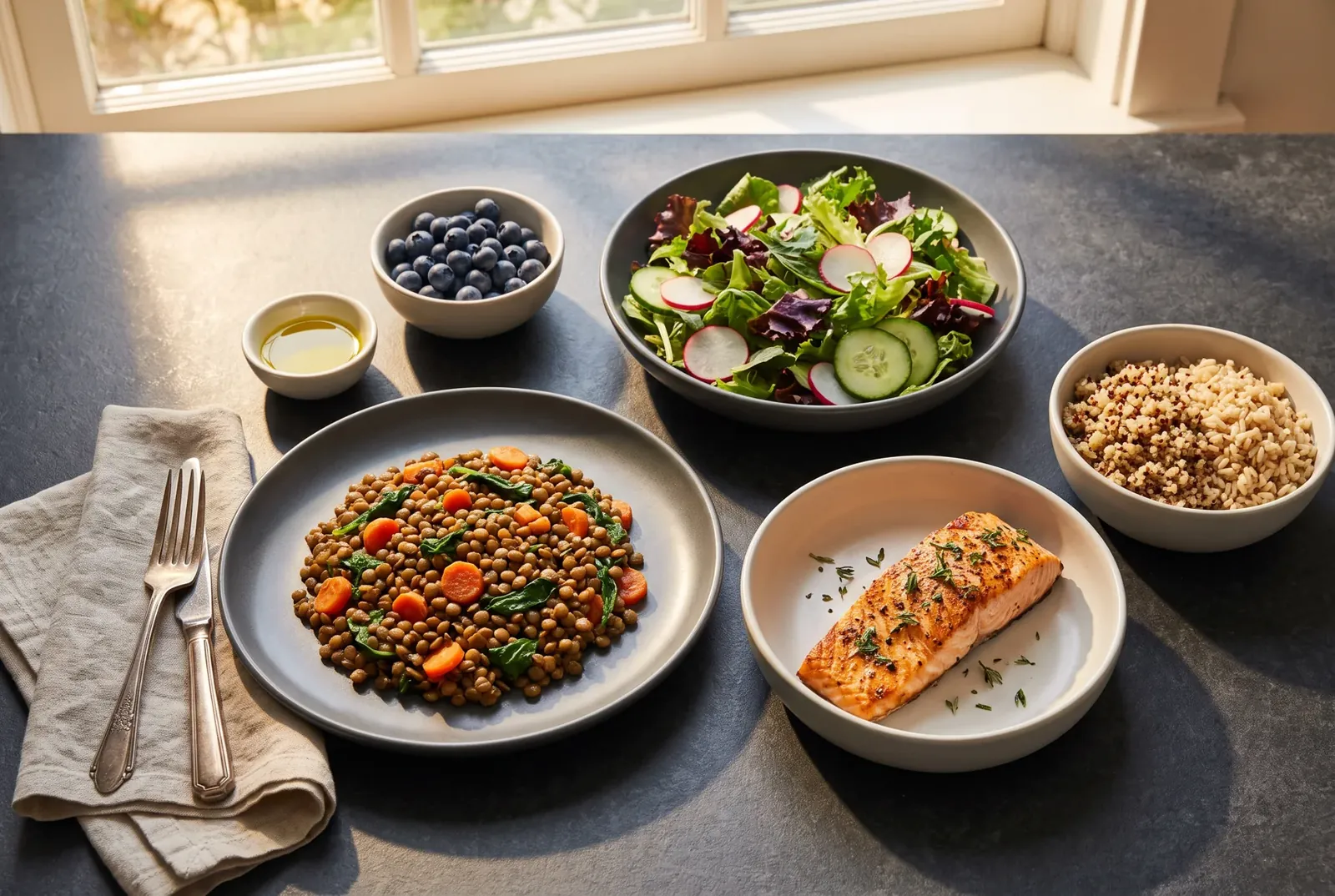
- Food. Build meals around varied vegetables, fruit, legumes, whole grains and suitable protein. Leafy greens and blueberries are useful choices, not compulsory quotas. Limit added sugars.
How much protein do I actually need?
Enough protein, not the most protein. McMaster protein researcher Stuart Phillips puts the emphasis on adequate intake paired with resistance exercise. At 1.2 g/kg/day the estimate is simple: multiply your body weight in kilograms by 1.2.
| Body weight | Starting estimate at 1.2 g/kg/day |
|---|---|
| 55 kg (121 lb) | 66 g per day |
| 70 kg (154 lb) | 84 g per day |
| 85 kg (187 lb) | 102 g per day |
| 100 kg (220 lb) | 120 g per day |
This is an educational estimate, not a personal prescription. Kidney disease, pregnancy, obesity, very low intake and other clinical situations can change both the target and the weight used for the calculation. Discuss the right weight basis with your clinician or dietitian. If you are on a GLP-1 medicine, see The Scale Is Moving. What Are You Protecting?
Step 03 · SupplementWhich supplements make the short list?
These are five conversations that can appear in my protocol when food falls short or a specific issue needs addressing. None is an essential purchase for every patient, and none replaces the steps above.
Disclosure. I work with Hofseth BioCare, the Norwegian company behind ProGo and Cardio Salmon. Product descriptions and small company-connected studies should not be mistaken for independent proof.
1. Vitamin D3: correct a need, not a number chase
A clinician may use 2,000 to 5,000 IU a day in selected patients, but that is not a blanket starting dose. 5,000 IU exceeds the usual adult upper limit of 4,000 IU a day and should only be used with medical supervision. Standard recommended adult intake is generally 600 to 800 IU a day. Dose and repeat testing depend on the reason for treatment, the blood level, current intake and relevant medical risks. Taking vitamin D with a meal containing fat can improve absorption. More is not better.
2. Cardio Salmon: omega-3s, a brand I use
I use a whole-salmon-oil option. The manufacturer describes its OmeGo ingredient as gently extracted, retaining a broad fatty-acid profile. That is a manufacturer description, not proof it outperforms all fish oils. Check the finished-product label, EPA and DHA content and quality documentation. Diet and cardiovascular risk guide the discussion; hs-CRP alone does not choose the product or dose. Ordinary fish-oil supplements are not equivalent to prescription omega-3 therapy. Review medicines, bleeding risk, fish allergy and high-dose atrial fibrillation concerns.
3. ProGo: salmon protein peptides, preliminary evidence
A named salmon hydrolysate showed promising blood-marker changes in a small comparison with whey, which is not proof it treats iron deficiency. The pilot included 14 adults, seven per group, comparing 12 g a day of ProGo with 12 g a day of whey for 56 days. Several blood measures favoured ProGo. Participants were not selected for iron deficiency, body-composition and metabolic results were exploratory, Hofseth was the registry sponsor and authors disclosed company ties. It was not a trial in GLP-1 users. A research dose is not your daily protein requirement or a self-dosing recommendation. Read the full ProGo evidence guide.
4. B vitamins: investigate before buying a daily B-complex
B12, folate and sometimes B6 status can matter when homocysteine is elevated. So can kidney function and other causes. Choose a nutrient, form and dose for a documented reason, not automatically one high-dose B-complex every day. B vitamins can lower homocysteine without reliably reducing cardiovascular events, and long-term excess B6 can cause peripheral neuropathy. Check combined intake across products and investigate deficiency or malabsorption rather than masking it.
5. Zinc: dose and duration before the form
Zinc glycinate may be one option, but choosing a form does not make a high dose harmless. Review diet and the clinical reason for testing; serum zinc is influenced by timing and inflammation. The usual adult upper limit is 40 mg a day from all sources. Higher or prolonged doses can inhibit copper absorption, so any therapeutic dose above that limit needs clinician direction, a set duration and a follow-up plan. Count your multivitamin and any other stacked products.
The full discussion may include magnesium, collagen, sleep support or other options. Hormones and prescriptions are separate medical decisions, used only when indicated, not standard add-ons to a supplement package.
Why does a dermatologist care about my bloodwork?
Skin is a longevity organ, but it is not the whole lab report. Skin findings can raise questions about health; they cannot diagnose a deficiency by themselves. I review your history and relevant testing to look for causes, not just symptoms.
That matters before lasers, too. Identifying poor intake, anemia or other relevant medical issues helps us plan treatment responsibly. It does not mean every patient needs a broad panel, or that supplements guarantee faster healing. More on this in Your Lab Says Normal. Your Hair May Disagree. and The Complete CO2 Recovery Guide.
What does a personal supplement review include?
Bring your existing results and the labels of everything you take. Together we decide what deserves attention, what may be unnecessary and what should be reviewed with your treating clinician.
- A review of relevant bloodwork and your current routine
- A written plan for appropriate choices, dose, timing and follow-up
- Hormone or advanced testing only when it adds useful information
- A clear discussion of evidence, uncertainties and options we would not use
Cardiac calcium scoring, VO2 max or specialist assessment may be discussed when appropriate. They are not automatically included or available through every visit, and fees are confirmed by the team.
Frequently asked questions
Do I need every test and supplement on this page?
No. These are teaching examples and possible clinical discussions, not a standard package for everyone. Your symptoms, history, diet and medicines determine which tests are useful and whether any supplement is needed.
Should I take 5,000 IU of vitamin D daily?
Not automatically. That dose exceeds the usual 4,000 IU/day adult upper limit and should only be used when directed and monitored by a clinician. Individual dosing depends on the clinical indication and relevant risks.
Does lowering homocysteine prove my heart risk is lower?
No. B vitamins can lower the marker without reliably reducing cardiovascular events. Elevated homocysteine needs context, including B12 and folate status, kidney function and a medication review.
Why is the protein estimate not one gram per pound?
It uses 1.2 g/kg/day as an educational starting estimate. The 1.2 to 1.6 g/kg range needs context, resistance training and an appropriate weight basis. Kidney disease, obesity, pregnancy and other situations can change the plan.
Does ProGo replace iron treatment or a GLP-1 medicine?
No. Its small 14-person, 56-day pilot was not an iron-deficiency treatment trial and excluded recent weight-loss-medication use. Exploratory results do not establish medication equivalence, muscle preservation or disease treatment. Fish allergy and product identity also need review.
Can I bring results from another doctor?
Yes. Bring existing results and your supplement and medicine labels. The team will explain how to share medical information securely.
Sources
- NIH Office of Dietary Supplements. Dietary Supplements: What You Need to Know.
- NIH Office of Dietary Supplements. Vitamin D: intakes, testing and upper limits.
- NIH Office of Dietary Supplements. Omega-3 fatty acids: clinical evidence and safety.
- Currie C, et al. ProGo salmon protein hydrolysate versus whey: 14-person pilot. Biomedicines. 2026;14(8):1663.
- ClinicalTrials.gov. NCT07616752: ProGo trial registration and sponsor.
- NIH Office of Dietary Supplements. Vitamin B6: homocysteine and neuropathy risks.
- NIH Office of Dietary Supplements. Zinc: intake, testing limitations and copper interaction.
- Phillips S, McMaster University. Protein beyond the hype: 1.2 to 1.6 g/kg/day in context. January 2026.
- World Health Organization. Physical activity recommendations.
- CDC. Adult sleep duration and sleep quality.
- Hofseth BioCare. OmeGo whole salmon oil. Manufacturer description, not independent efficacy evidence.
- NIH Office of Dietary Supplements. Vitamin B12: status and deficiency assessment.
Where this fits at Sajic Longevity. Your supplement plan should be written from your bloodwork, not from a shelf. We test what can change a decision, fix the foundations, then add only what earns its place, and we retest to see what moved. Book a consultation or call 1-888-430-4665.
Get a supplement plan written from your bloodwork.
Bring your results and the labels of everything you take. We keep what earns its place and drop what does not.
Precision diagnostics
The physician-directed blood panels behind a test-first protocol, from ferritin and B12 to biological age.
Read more → BookBook a consultation
Virtual. $150 nurse consult (includes SkinLife Analytics) or $499 45-min physician consult with Dr. Sajic (includes TruAge biological age testing). Deposit applied in full to diagnostic testing.
Book now → ShopSee membership tiers
Every membership begins with the diagnostic suite, then retests the same markers so you can see what moved.
Shop now →Not sure which is right for you? Call 1-888-430-4665 or email consult@sajicskin.com and our team will point you to the right starting point.
This article is for education and is not medical advice. It does not establish a physician-patient relationship. Product and treatment decisions are made only after an individual assessment. Do not start, stop or change medicines based on this article. Review supplements with your clinician, especially during pregnancy, with kidney disease, fish allergy or regular medication use. Disclosure: Dr. Sajic works with Hofseth BioCare, the company behind ProGo and Cardio Salmon; the product relationship does not establish clinical efficacy.