“I’m Doing Everything Right. Why Is My Skin Getting Worse?”
Retinol. Acids. Procedures. Pollution. Sun. Stress. The problem may not be one bad product. It may be that your skin is being asked to recover from too much, too often.
When skin gets more reactive, red or blotchy despite a careful routine, the cause is often not one bad product but a Recovery Gap: the total load of actives, exfoliation, procedures, sun, pollution and internal stress is arriving faster than the skin can repair. Dr. Dusan Sajic’s approach at Sajic Longevity is to simplify the overlap, protect the recovery window, measure what matters, and only then escalate.
- More actives and more exfoliation can keep re-injuring skin before the last signal has settled.
- Burning, persistent redness and returning pigment are clues, not proof of a “destroyed” barrier. Persistent or worsening symptoms need medical review.
- Aggressive CO2 shows the principle clearly: the laser creates controlled injury, your biology builds the result.
- Recovery is a system, not one ingredient: barrier, inflammation, oxidation, microbes, DNA repair, matrix and nourishment.
- No single test proves you have recovered. Choose the smallest baseline that can change a decision, and repeat it the same way.
The Recovery Gap is an educational framework, not a diagnosis. Persistent burning, rash, swelling, pain, infection signs, or eye symptoms require medical assessment.
Why is my skin getting worse when I am doing everything right?
Most often, because the skin is being asked to respond again before it has finished recovering from the last request. It is not a lack of effort. Sometimes the routine itself becomes another source of stress.
For years we became very good at stimulating skin and thought much less about its ability to recover. In my clinic, patients kept arriving with more products and less tolerance. A retinoid, two acids, a vitamin C serum, an exfoliating cleanser, a peel last month and microneedling next week. Each of those can be a useful tool. Stacked without a protected recovery window, they become an overload cycle.
The four questions I hear most are really four versions of the same problem:
| What patients ask | What it often means |
|---|---|
| Why does my moisturizer suddenly burn? | Your tolerance changed. |
| Why am I red after doing more? | More treatment is not always more recovery. |
| Why does my pigment keep coming back? | Inflammation can keep restarting the signal. |
| Why do I heal so slowly? | The surface may be revealing a larger recovery problem. |
Your skin may not need another active. It may need the ability to recover again.The skincare overload cycle
Can using too many skincare products damage your skin barrier?
Yes, it can. More actives, more exfoliation and more procedures can keep asking the same tissue to respond before the last signal has settled, and irritant reactions build from that kind of repeated, overlapping exposure. What if your skin does not need more? What if it needs permission to recover?
Over-exfoliated skin is the classic example: products that used to feel gentle now sting or flush, and tightness, flaking or redness keep returning. That pattern deserves a simpler plan before it deserves a stronger one. The three steps I start with:
- Pause unnecessary overlap. Identify which actives, exfoliants and treatments are doing the same job and stop the duplicates. Do not stop a prescribed treatment without speaking with the prescriber.
- Protect the recovery window. Give the skin a defined period in which it is not being asked to respond to a new irritant, with daily UV protection throughout.
- Rebuild tolerance before escalating. Reintroduce one tool at a time, and only once the skin is calm, so you can see what each one is actually doing.
Book a consultation. Virtual. $150 nurse consult (includes SkinLife Analytics) or $499 45-min physician consult with Dr. Sajic (includes TruAge biological age testing). Deposit applied in full to diagnostic testing. Book now →
What can CO2 laser recovery teach us about everyday skin?
It makes the lesson visible: the laser creates the signal, and recovery biology builds the result. A fractional CO2 laser deliberately creates controlled injury. Whether that injury becomes a beautiful result or a prolonged problem depends on the recovery system around the device.
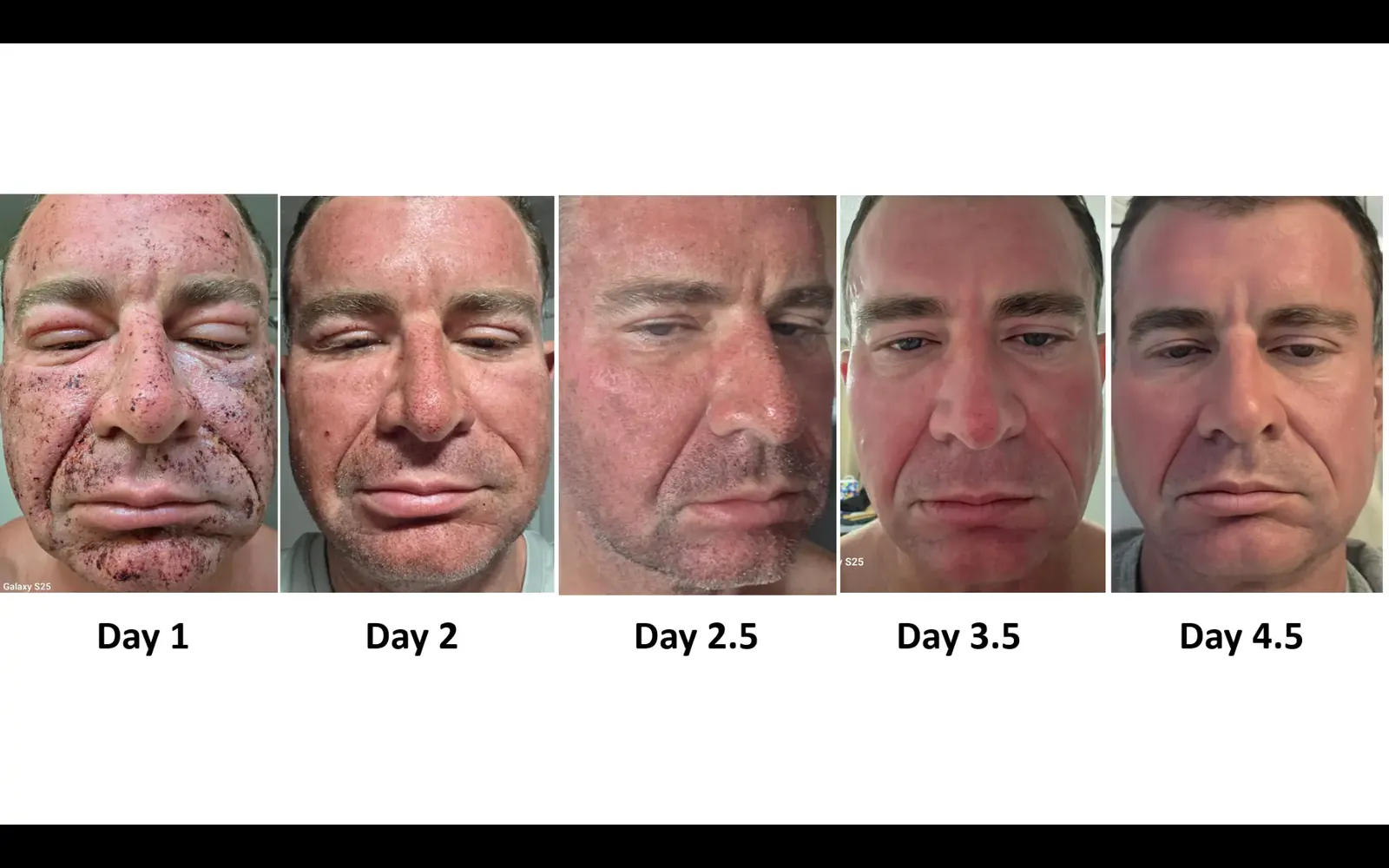
This sequence does not promise that every patient will recover on this schedule. It shows why treatment intensity and recovery planning must be designed together. The four phases I plan for every resurfacing patient:
| Phase | Goal | What happens |
|---|---|---|
| Before | Prepare the terrain | Review pigment risk, barrier status, medications, infection risk, and the recovery support a patient can safely sustain. |
| Procedure | Match the dose | Depth, density, anatomy, skin type and history determine the controlled injury, not a one-setting-fits-all menu. |
| Days 1 to 2 | Protect the wound | Follow written cleansing, occlusion, edema-control and contact instructions supplied by the treating clinic. |
| Days 2 to 5+ | Advance in sequence | Reintroduce light, biologic or topical adjuncts only as the surface closes and the clinician judges them appropriate. |
Fast recovery is designed, not assumed. More power without more preparation is not a better protocol. The full sequence is in my CO2 laser recovery guide, and you can read whether resurfacing suits you on the CO2 laser page.
Safety boundary. CO2 resurfacing can cause prolonged redness, pigment change, infection, scarring, or delayed healing. Treatment and aftercare require individual medical assessment.
What keeps interrupting skin recovery in daily life?
Repeated low-grade exposure plus incomplete recovery. CO2 taught us to protect the window; daily life can keep reopening it. Damage is not always dramatic. It can be the quiet total of five sources of stress acting on the same skin:
| Source | How it adds to the load |
|---|---|
| Sun | DNA damage, oxidative stress, pigment and immune signalling. |
| Pollution | Particles and ozone can add oxidative and barrier stress. |
| Products | Fragrance, surfactants, adhesives, friction, or personal allergy. |
| Procedures | Controlled injury works best when the recovery window is protected. |
| Inside | Sleep, nutrition, metabolic health, hormones and chronic inflammation can influence repair capacity. |
A note on language. “Irritant” and “allergen” are more precise than “toxin.” Most cosmetics are not inherently toxic when used as intended; an individual flare still needs history, examination, and sometimes patch testing.
The “inside” row matters more than most routines acknowledge. If sleep, energy, hormones or chronic inflammation are part of the picture, the surface may be reflecting the system. I explain how we look for that in what inflammation may be hiding.
Barrier repair is step oneIs skin recovery just barrier repair?
No. Barrier repair is step one; recovery is the bigger system. When we developed GMA7, the starting point was a multi-pathway recovery question, not the idea that one ingredient solves every concern. These seven areas organise how I think about resilient skin. They are a clinical design framework, not seven diagnoses, and not a guarantee that one formula repairs every pathway.
| Recovery pathway | The question it asks |
|---|---|
| 1. Barrier integrity | Can the surface hold water and keep irritants out? |
| 2. Inflammatory balance | Can the response switch off after it has done its job? |
| 3. Oxidative defense | Can the skin manage reactive oxygen species generated by UV, pollution and repair? |
| 4. Microbial ecology | Are barrier microbes and immune signals supporting, not fighting, one another? |
| 5. DNA-damage response | Can cells recognise selected lesions and coordinate repair or removal? |
| 6. Extracellular structure | Can collagen, elastin and the matrix be cleared and rebuilt in an organised way? |
| 7. Nourishment and delivery | Does the tissue have the nutrients, circulation and systemic support required for repair? |
Beautiful skin is not only skin with fewer lines. It is skin that can meet stress, repair, and regain equilibrium.
The 12 hallmarks · four recovery questionsHow do the 12 hallmarks of aging relate to skin recovery?
They are interconnected research mechanisms, so rather than treating them as twelve separate problems, I group them around four questions that guide what to protect, measure or discuss next. This map does not claim that skincare can diagnose or reverse all twelve.
1. Damage control: can cells recognise, limit, and respond to accumulated damage?
- Genomic instability. UV and oxidative stress can damage DNA; protection and screening remain foundational.
- Telomere attrition. Aging cells may have less replicative reserve. A topical routine cannot diagnose or reverse this hallmark.
- Epigenetic alterations. Environmental stress can change gene regulation; skin epigenetic research is emerging.
2. Energy and cleanup: can cells produce energy and remove what no longer works?
- Loss of proteostasis. Cells must clear or recycle damaged proteins during repair.
- Disabled macroautophagy. Autophagy helps cells remove damaged components; this is not measured by a cosmetic mirror.
- Mitochondrial dysfunction. Mitochondria supply energy for repair and help regulate oxidative signalling.
3. Repair reserve: is there enough regenerative capacity to rebuild after stress?
- Deregulated nutrient sensing. Metabolic health and nutrition can influence repair capacity, but individual testing must be clinically selected.
- Cellular senescence. Senescent cells can release inflammatory signals and alter the surrounding tissue.
- Stem-cell exhaustion. Regenerative cell pools and tissue age influence how completely skin can rebuild.
4. Signals and environment: can inflammation, microbes, and cell-to-cell messages return to balance?
- Altered intercellular communication. Immune, pigment, vascular and fibroblast signals must coordinate rather than remain chronically activated.
- Chronic inflammation. Persistent inflammatory signalling can prolong redness, pigment, tissue breakdown and systemic aging risk.
- Dysbiosis. Microbial imbalance can interact with barrier and immune signalling, but current commercial tests have limits. I cover the evidence in the microbiome aging pillar.
Clinical boundary. Hallmarks are research mechanisms. No consumer self-check, topical product, or single blood test can tell you that all twelve are “fixed.”
How do you know if your skin has actually recovered?
No single test answers that, so the practical goal is to build the smallest baseline that can change a decision and to repeat it under comparable conditions. Did you recover, or did the redness just fade? Each layer below answers a different question, and each has a limit.
| Layer | Question | What it can add | What it cannot prove |
|---|---|---|---|
| Visible and UV baseline | Is the damage visible yet? | Standardised photography, VISIA redness, pigment, UV spots, and symptom history. | Images show patterns; they do not diagnose the cause. |
| TEWL and hydration | Can your barrier hold water? | Transepidermal water loss and hydration under controlled conditions. | Environment, site and protocol can change the reading. |
| Elasticity | Does skin rebound after stress? | Cutometer-based mechanical response and standardised follow-up. | A repeatable protocol matters more than one isolated score. |
| Microbiome | Is the ecosystem part of the pattern? | PurelyBiome may add a qPCR-based skin ecosystem snapshot. | Commercial scores are adjuncts, not disease diagnoses. |
| Mitochondria and oxidation | Is cellular stress changing? | SkinLife Analytics and PAOT may add mitochondrial-damage or oxidative-balance signals. | These proprietary or adjunctive measures need clinical context. |
| Internal pace | Is the surface reflecting the system? | Focused bloodwork and, when useful, TruDiagnostic/DunedinPACE. | Pace of aging is a biomarker, not a diagnosis or guarantee. |
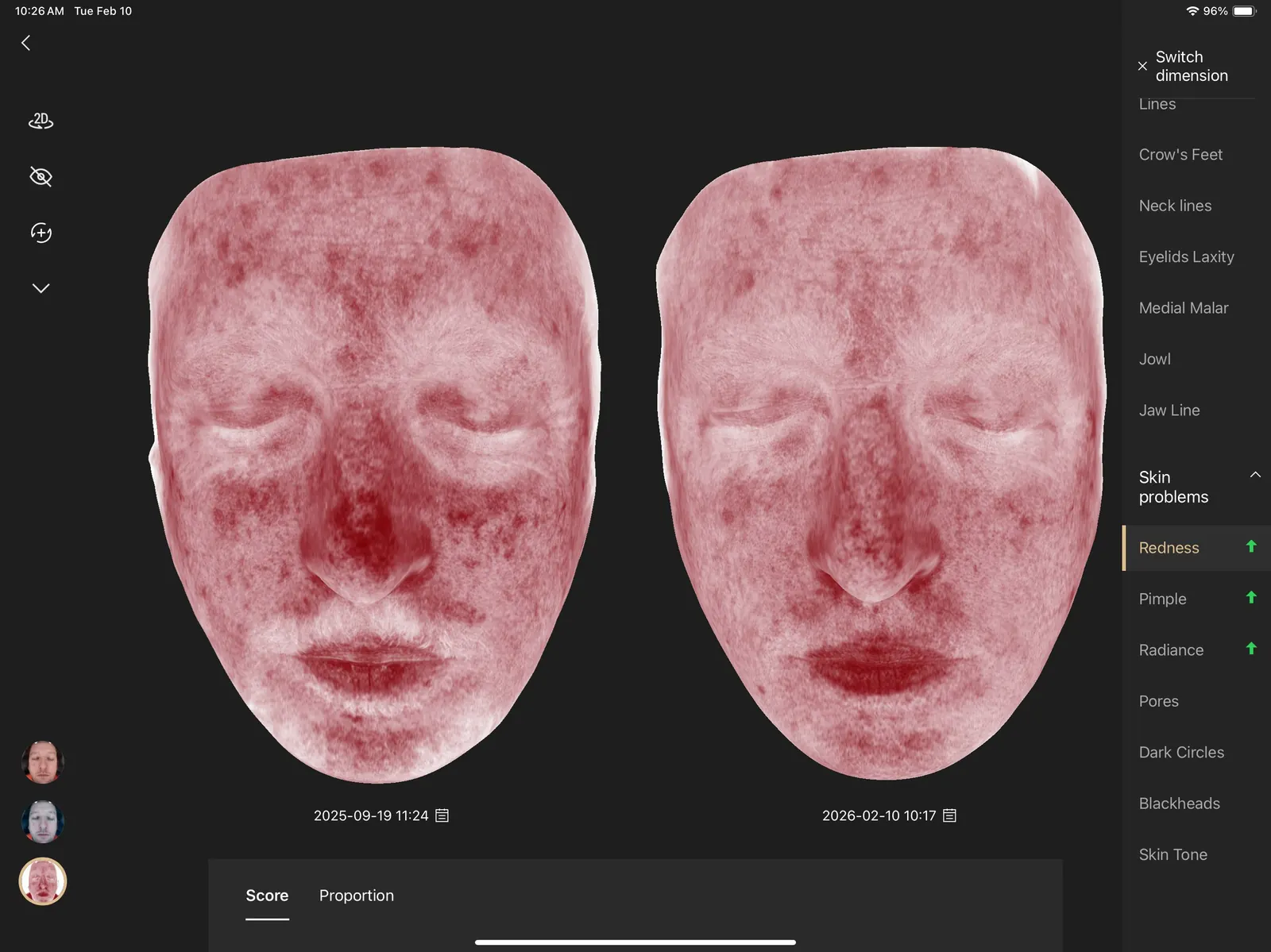
The full menu of what we track, and how it is ordered, is on the diagnostics page.
Recovery optionsWhat actually helps damaged or over-treated skin recover?
The right tool depends on the recovery problem, so there is no universal prescription. These are the options I discuss, and the boundary that comes with each.
Daily foundation: Rejuvenat and Protectif
Multi-pathway recovery support plus daily UV protection. A foundation, not the whole plan. Cosmetic skincare does not replace diagnosis, prescriptions, skin-cancer screening, or medical care.
Professional-use, emerging: exovex® / Exocel Bio
A clinician-selected topical extracellular-vesicle option that may be discussed around procedures. Products and protocols differ, and early human literature on topical extracellular-vesicle products is encouraging but heterogeneous. Important: no exosome product is FDA-approved. The FDA previously objected to Exocel Bio disease, inflammation, wound-healing and injection claims, and we do not repeat those claims.
Procedure recovery: CO2 plus sequenced care
Plan pigment risk, depth, barrier support, occlusion, follow-up and the order of adjuncts before treatment day. Prepare, treat, protect, re-measure.
Upcoming, not yet available: Mitologique
In development for the mitochondrial and cellular-energy side of recovery. Product-specific mitochondrial-repair and red-light-synergy outcomes are not yet established publicly. Red light itself has evidence for selected mitochondrial and epidermal effects under defined protocols.
Is there evidence behind GMA7?
Yes, for specific measured endpoints, not for whole-body age reversal. We did not want another claim; we wanted a signal we could measure. Our peer-reviewed 2026 translational evaluation reported:
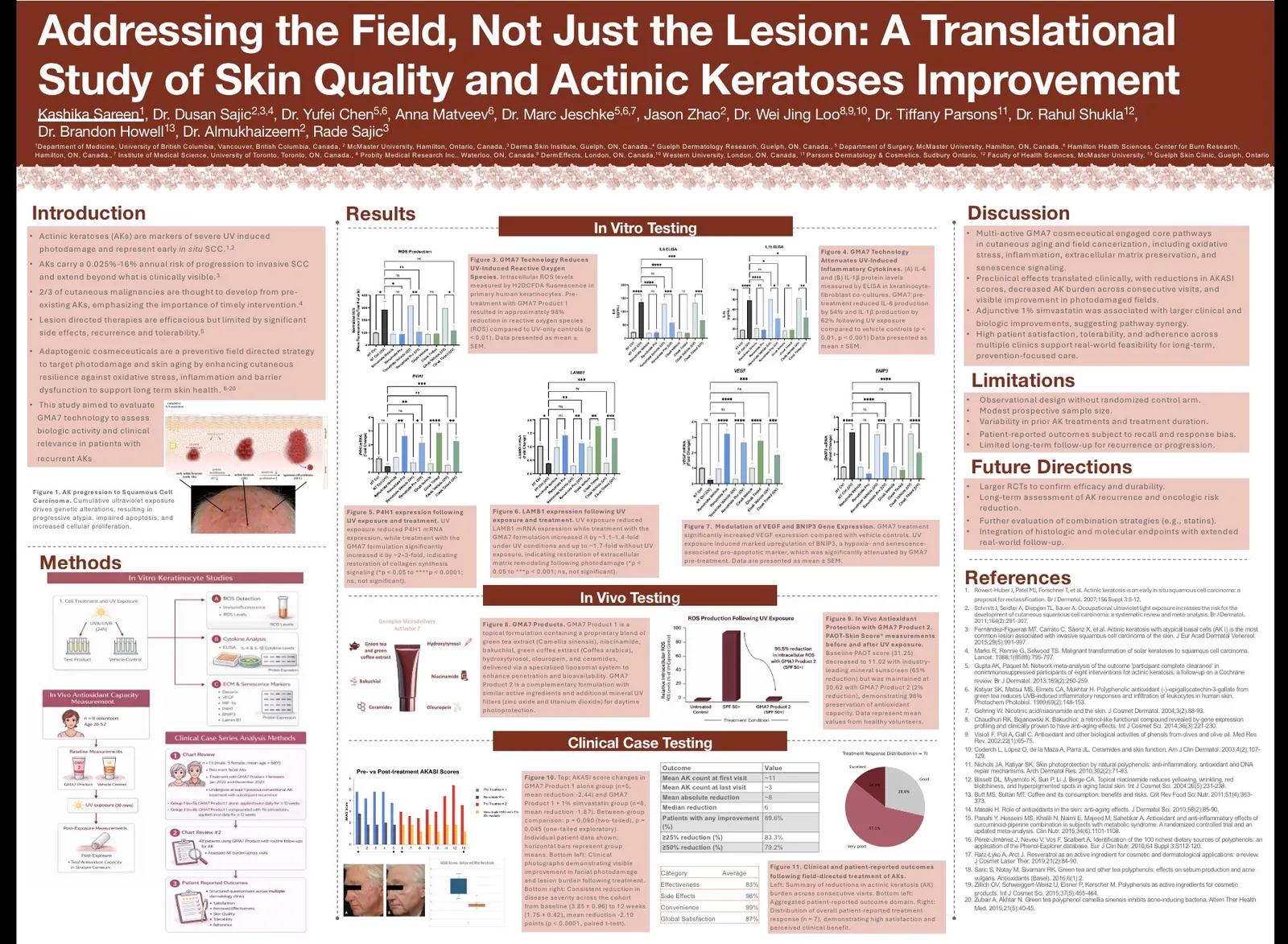
These are specific measured endpoints, not proof of whole-body age reversal. Some cohort participants also used topical simvastatin, so the formula cannot receive all the credit. The cohort is small, and I present it as encouraging evidence of repair-related effects.
Recovery self-checkHow can I tell what kind of recovery my skin needs?
Work through the seven questions below. Your answers point to a pattern you can bring to a physician; they are not a diagnosis and not a universal protocol.
1. Which sentence sounds most like your skin right now?
| If this sounds like you | What it suggests | Where to start the conversation |
|---|---|---|
| Everything suddenly stings, even products that used to feel gentle | Reduced tolerance | Simplify, and build a repair and UV-protection foundation |
| My skin never seems to recover: redness, dryness, breakouts or sensitivity keep returning | A persistent Recovery Gap | Repair and protection, plus a measured baseline |
| Every irritation leaves a mark after sun, acne or procedures | Pigment risk | Protection before correction |
| I want treatment, but I worry about healing | Procedure recovery | Prepare, treat, protect, re-measure |
| My skin looks tired because I feel tired | Possible internal contributors | An inside-out baseline |
2. What is your skin being asked to recover from?
Count every load that applies. The Recovery Gap grows when inputs accumulate faster than repair.
- Retinoids, acids, vitamin C or exfoliation. Useful tools can still irritate when timing or stacking is wrong.
- Lasers, peels, RF or microneedling. Controlled injury needs a protected repair window.
- Sun, heat, pollution or outdoor exposure. The exposome adds oxidative and inflammatory stress.
- Makeup, cleansers, fragrance or many products. Irritation is more useful language than vague “toxins.”
- Acne, rosacea, eczema or recurrent inflammation. The diagnosis and its activity matter before adding more treatment.
- Poor sleep, stress, low energy or slower healing. Internal context can change how aggressively we proceed.
3. After a flare or treatment, how long until your skin feels like itself again?
Longer recovery is not a failure. It is a reason to reassess the load, the biology and the sequence.
- Usually within 24 to 48 hours: your current recovery reserve may be relatively strong.
- Several days: preparation and product timing may still improve comfort.
- One to several weeks: a simpler phase and an objective baseline may be useful.
- It never feels fully stable: a clinician should look for ongoing triggers or an active condition.
4. What tends to linger after the stress?
- Tightness, flaking or dehydration: barrier function and water loss may be useful to assess.
- Redness, heat or sensitivity: ongoing inflammation or irritation may need stabilisation.
- Darkening or uneven pigment: pigment-aware preparation and UV protection become central.
- Crepiness or loss of bounce: mechanical elasticity can be tracked under standardised conditions.
- Slower healing than expected: history, aftercare, nutrition, medications and internal signals may matter.
- Breakouts or rough texture: barrier, microbiome, products and the underlying diagnosis can overlap.
5. What have you actually measured before changing the plan?
Not everyone needs every test. A baseline is valuable only when it can change a decision. Most people are changing products without a reliable baseline.
- Standardised clinical photography: a consistent visual baseline for redness, pigment and texture.
- TEWL, hydration or elasticity: functional measurements of water loss and mechanical recovery.
- PurelyBiome or another skin microbiome test: an adjunctive ecosystem snapshot, not a disease diagnosis.
- SkinLife Analytics or PAOT: adjunctive molecular or oxidative-balance signals.
- Bloodwork or TruDiagnostic: internal context and pace-of-aging tracking when it can guide care.
6. How ready are you to simplify, follow a sequence, and re-measure?
Recovery improves when the plan is consistent enough to learn from, not when everything changes at once. If you are not ready to hold one plan steady for a few weeks, start there.
7. Protect the patient first: does any of this apply right now?
These answers do not mean “no.” They mean medical review comes before a product or procedure recommendation.
- Open skin, infection, blistering, weeping or a rapidly worsening rash: active disease or infection needs assessment first.
- Eye involvement or major facial swelling: this may require urgent clinical assessment.
- Immune suppression, autoimmune treatment or major uncontrolled illness: coordination and timing may change the plan.
- Poor healing, thick scars or prior pigment complications: preparation, depth and modality require extra care.
- Pregnant, breastfeeding or trying to conceive: many elective products or procedures are modified or deferred.
Reading your answers
| Your pattern | What it suggests | What to discuss or ask |
|---|---|---|
| Any answer in question 7 | Stabilise before adding more | Pause experimentation and arrange medical assessment. Do not stop prescriptions without the prescriber. |
| Stinging or never-recovering skin, weeks-long recovery, stacked actives, lingering dryness, redness or breakouts | Your skin may need less noise and more recovery capacity | A recovery-first repair and UV-protection foundation; ask how it fits your current prescriptions, actives and procedure timing. |
| Recurrent darkening, or regular sun and outdoor exposure | Protection before correction | Build a pigment-aware plan before escalating acids, lasers or heat-based treatment. |
| You want, or regularly have, procedures | Do not plan only the procedure. Plan the recovery system. | A physician-led plan for depth, sequencing, pigment risk, pre-care and post-care. If healing is slow, ask whether an emerging adjunct such as exovex® is appropriate, with informed discussion. |
| Nothing measured yet, or lingering water loss, laxity, redness or breakouts | Before adding more, create a baseline you can compare | Choose the smallest test set that can change the plan, then repeat it under comparable conditions. |
| Tired skin, internal stressors or slow healing | Your skin may be asking for an inside-out baseline | Focused bloodwork and, when useful, TruDiagnostic/DunedinPACE, used when the result could change timing, intensity or foundational treatment. |
Your history, examination, medications and goals still decide the final plan.
Frequently asked questions
Why does my moisturizer suddenly burn?
Burning can happen when barrier function is impaired, but it is not specific to one cause. Irritant or allergic contact dermatitis, rosacea, infection and other conditions can feel similar. Stop adding new products and arrange medical review if symptoms persist, spread, blister, weep, or involve the eyes.
Did I destroy my skin barrier?
Skin can often restore barrier function, but the timeline depends on the cause, severity, exposures, and whether inflammation is still being triggered. “Destroyed barrier” is usually less useful than identifying what changed, simplifying overlapping stressors, and monitoring recovery.
Should I stop retinol and acids?
Do not stop a prescribed treatment without speaking with the prescriber. Around procedures or during active irritation, clinicians often pause higher-irritation actives and use a simpler, phase-appropriate routine. The correct timing depends on the product, the procedure, and your skin.
Why does pigmentation keep coming back?
Pigment can be driven by UV exposure and by inflammation after acne, irritation or procedures. Treating pigment more aggressively while the skin remains inflamed can perpetuate the cycle, especially in darker phototypes. The source of inflammation and the pigment risk should be assessed together.
Is the Recovery Gap a medical diagnosis?
No. It is a clinic communication framework for the gap between cumulative skin stress and current recovery capacity. It does not replace an examination or diagnose dermatitis, allergy, rosacea, infection, or systemic disease.
Can GMA7 or Rejuvenat reverse all 12 hallmarks of aging?
No. The hallmarks are interconnected research mechanisms, not a checklist that one topical product can diagnose or reverse. GMA7 is a multi-pathway formulation philosophy supported by specific measured endpoints; skincare remains one part of protection, repair support, screening, procedures, and systemic care.
Which test proves that my skin has recovered?
No single test does. Standardised photography, symptoms, examination, TEWL, hydration, elasticity, microbiome testing, SkinLife Analytics, PAOT, bloodwork or TruDiagnostic each answer different questions. The useful test is the smallest one that can change a clinical decision and can be repeated under comparable conditions.
Verifiable sources
The GMA7 data come from a small prospective cohort in which some participants also used topical simvastatin. Topical exosome literature is early and heterogeneous. Commercial skin and microbiome tests are adjuncts, not diagnoses.
- Patel K, Nixon R. Irritant contact dermatitis: a review. 2022. PMC8989112
- Wyles SP, et al. Skinspan and the skin exposome. Mayo Clinic Proceedings. 2025. Full text
- Bocheva G, et al. Air pollution and skin health. 2023. PMC10341863
- Markiewicz E, et al. Post-inflammatory hyperpigmentation. 2022. PMC9709857
- Hong et al. Skin microbiome and aging. 2025. PMC12505367
- López-Otín C, et al. Hallmarks of aging: an expanding universe. Cell. 2023. doi:10.1016/j.cell.2022.11.001
- Bjerring P, et al. International consensus on skincare around aesthetic procedures. 2026. PubMed 42087526
- Sajic D, et al. GMA technology translational evaluation. 2026. doi:10.25251/zafw9b40
- Memorial Sloan Kettering Cancer Center. Skin care after fractionated CO2 laser treatment. Patient education
- Umino Y, Denda M. Red light, epidermal proliferation and mitochondrial activity. 2023. PMC10462800
- US Food and Drug Administration. Untitled letter to Exocel Bio regarding exovex claims. 2024. FDA letter
- Ash M, et al. Topical exosome therapy for skin rejuvenation and wound healing: a systematic review. 2024. PMC11023079
- Belsky DW, et al. DunedinPACE, a DNA-methylation biomarker of the pace of aging. 2022. PMC8853656
- SkinLife Analytics. Mitochondrial skin-damage testing. Product information
- PurelyBiome. qPCR-based skin microbiome testing. Product information
- Pincemail J, et al. Electrochemical methodology for skin oxidative stress status. MDPI
- Abbas DB, et al. Standardizing Cutometer parameters for in vivo skin elasticity. 2022. PMC8982109
Where this fits at Sajic Longevity. Stop experimenting and start with a recovery map. We review what you use, what changed, how your skin feels, recent procedures, pigment risk, health history, and which measurements may actually change the plan. Sometimes the right recommendation is less. Book a consultation or call 1-888-430-4665.
Stop experimenting. Start with a recovery map.
A physician review of what you use, what changed and what to measure. Sometimes the right recommendation is less.
Precision diagnostics
Imaging, barrier, microbiome, oxidative and internal measures, chosen only when they can change the plan.
Read more → BookBook a consultation
Virtual. $150 nurse consult (includes SkinLife Analytics) or $499 45-min physician consult with Dr. Sajic (includes TruAge biological age testing). Deposit applied in full to diagnostic testing.
Book now → Shop Sajic Skin ScienceRejuvenat + Protectif duo
GMA7 multi-pathway recovery support plus daily UV protection. A foundation, not the whole plan.
Shop now →Not sure which is right for you? Call 1-888-430-4665 or email consult@sajicskin.com and our team will point you to the right starting point.
This article is for education and general information only. It is not medical advice, does not establish a physician-patient relationship, and should not replace consultation with a qualified healthcare provider. If skin is persistently painful, blistered, swollen, weeping, infected, involving the eyes, or worsening rapidly, seek medical assessment. Do not stop a prescribed medication or treatment without the prescribing clinician. Individual results vary.